
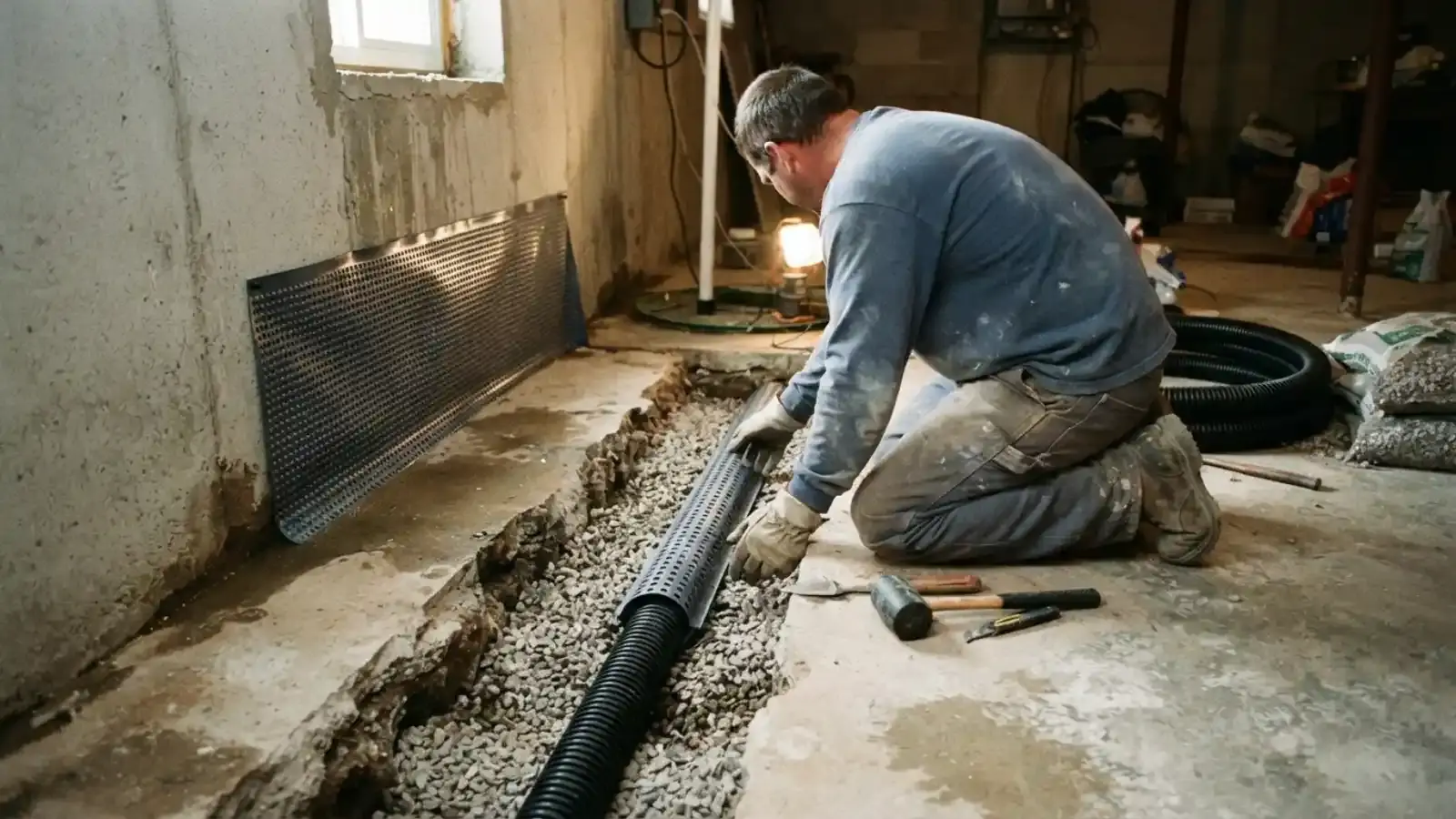
Basement waterproofing covers the systems that keep water from entering or standing in a basement. In practice, that usually means interior drain tile along the footing, a sump pit and pump, and repair of cracks and wall seepage, plus fixing the grading and gutters outside that send water toward the house.
Where the water comes from
Groundwater pushes against the walls and floor and finds the cove joint where the floor meets the wall.
Gutters, grading or window wells that send rain toward the foundation.
Settling cracks and form tie holes in poured walls that seep when the soil is saturated.
A leaking supply or drain line mistaken for foundation seepage. See leak detection.
High water in the river valley
Shakopee lies in the lower Minnesota River valley. The 2024 flooding closed part of the Valleyfair parking lot, and residents compared it with the flood of 1965, per local news coverage. Basements in low areas near the river can see rising groundwater long after rain ends, so a system for them should assume the water table will rise.
Interior drain tile and sump
An interior system removes a strip of concrete along the wall, lays perforated pipe in gravel, and routes the water to a sump pit where a pump sends it outside. A wall liner can direct seepage from the wall into the drain. This keeps the water out of the living space without excavating around the foundation.
| Approach | Works for | Limits |
|---|---|---|
| Interior drain tile and sump | Seepage at the floor and wall joint, rising groundwater | Does not stop water from touching the outside of the wall |
| Exterior excavation and membrane | Wall cracks and deep leaks on one side | Costly, disruptive and needs digging beside the house |
| Crack injection | Single cracks that leak | May not hold if the wall keeps moving |
| Grading, gutters and window wells | Surface water entering | Needs to be done even if other systems are installed |
Start outside
Before spending on a sump system, check what the yard does with water. Downspouts should discharge several feet from the foundation, soil should slope away from the house, and window wells should drain. Many wet basements improve markedly after a half day of outside fixes, and the plumber will tell you when the problem is not plumbing.
Signs to treat seriously
- Standing water that returns after every heavy rain or thaw.
- White mineral deposits on walls, which show water has passed through.
- A musty smell or mold on lower walls and stored items.
- A damp spot at the bottom of walls where floor and wall meet.
- Horizontal cracks or a bowing wall, which need a structural engineer.
A bowing wall or a wide stair-step crack is a structural issue, and a plumber is not the right first call. We will say so plainly and point you to an engineer when that is the case.
If water is in the basement now
Water in the basement during a storm is an urgent problem even if the repair is a planned job. Check the sump pump first, and see emergency sump pump repair if it has failed. A plumber can dispatch at any hour for a pump failure, and the waterproofing plan follows once the water is under control.
What affects waterproofing cost
You get a written plan and price after the plumber has seen the basement. Standard homeowner coverage often excludes seepage and groundwater, so a sump backup endorsement or flood coverage is worth asking your insurer about. For the pump itself, the sump pump page has the details.
Drain tile and sump work follow the Uniform Plumbing Code (UPC) as adopted in Minnesota Rules chapter 4714 where they connect to the plumbing system.
What to do while water is entering the basement
- Move belongings and electronics off the floor and away from the walls.
- Turn off power to the basement at the breaker if the panel is dry and you can reach it without standing in water.
- Check that the sump pump is running and the discharge is clear.
- Photograph the water line and the entry points for insurance.
Waterproofing questions
If water appears only when the pit overflows or the pump fails, a pump repair may be enough. If water seeps through walls and the floor joint with a working pump, a drain system is the next step.
Yes. An interior drain tile and sump system is the most common approach, and it avoids digging beside the foundation.
It removes the cause of the dampness, but mold and odor may still need cleaning. A dehumidifier helps afterward.
No. A bowing or stair-step cracking wall needs a structural engineer first.
The planning work is scheduled, but a flooded basement is an emergency. We dispatch around the clock for pump failures and active water.
Not sure which answer fits your situation? Call the 24/7 line and describe what you see.