
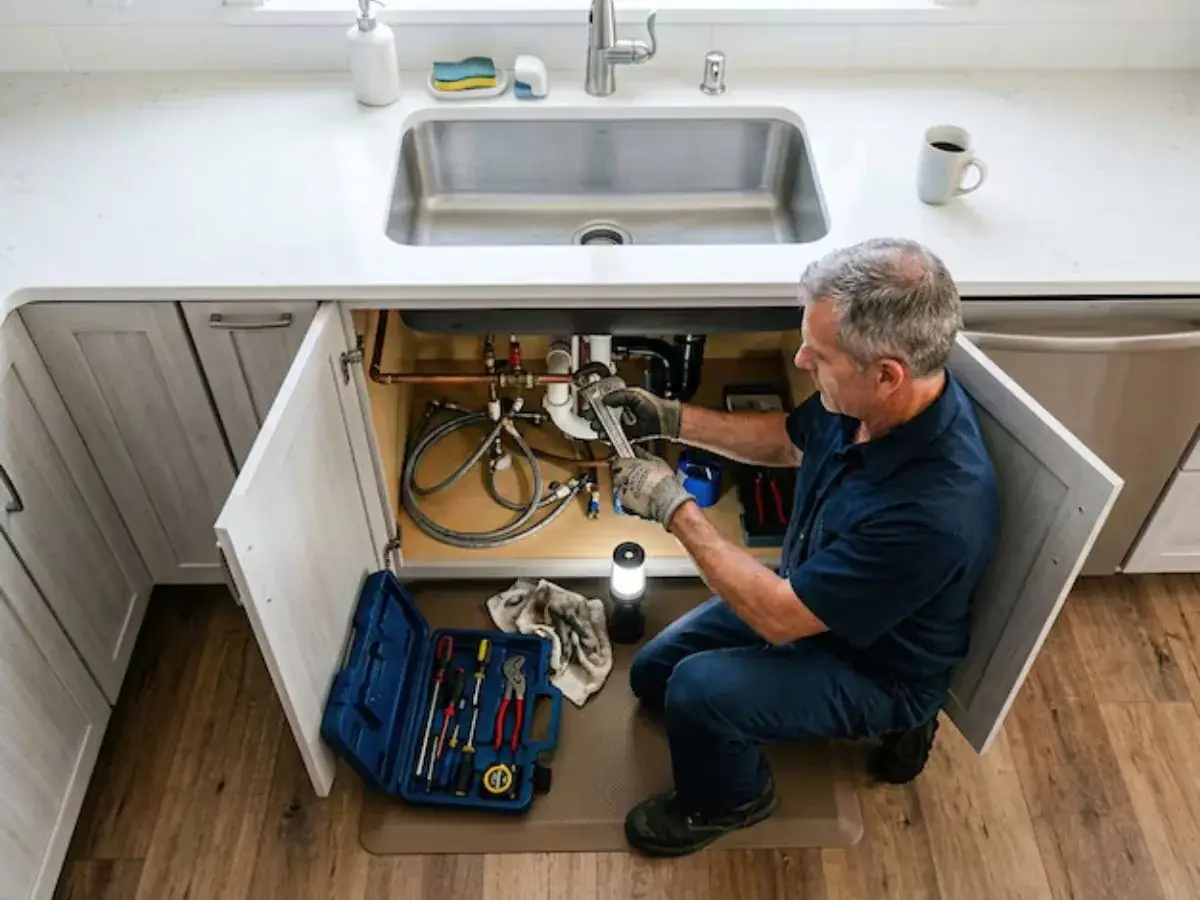
Plumbing installation is the work of adding or relocating fixtures, supply lines, drains and vents. It differs from repair because the plumber designs a layout, installs the lines in the right order and coordinates with inspections and other trades.
What we install
Sinks, faucets, dishwashers, disposals, pot fillers and ice maker lines.
Toilets, vanities, tubs, showers, bidets and new rough-in for added baths.
Washer hookups, laundry sinks, hose bibs and sump discharge lines.
Basement bathrooms and finished lower levels
A basement bathroom needs a drain that is lower than the main, or a way to lift waste up to it. When the floor is below the sewer line, a sewage ejector pit and pump handles the toilet, and a grinder or up-flush unit is another option. The plumber checks the depth of the main before suggesting a layout, and a camera helps if the line is old. See sewer camera inspection before a big basement project.
Many homes in Shakopee have full basements, and a finished lower level is a common project. It adds living space, and also adds plumbing that has to work for decades inside finished walls, so the rough-in should be pressure tested before closing the wall.
Drain and vent basics
Every drain needs a vent so wastewater can flow and traps do not siphon dry. A new fixture usually ties into an existing vent stack or adds a new one through the roof or a tie-in. A fixture that gurgles or drains slowly after installation often has a vent problem and not a clog.
Plumbing codes set how far a fixture can sit from its vent, and a plumber follows those rules. Ask the City of Shakopee building inspections office about permits before you start.
| Project | What it involves | Things to decide first |
|---|---|---|
| New bathroom rough-in | Supply, drain and vent lines to the new location | Where the main drain sits and whether a pump is needed |
| Kitchen remodel | Move or add sink, dishwasher and disposal lines | Cabinet layout and venting |
| Laundry relocation | Washer box and standpipe with trap | Drain size and overflow protection |
| Outdoor spigot or utility sink | New supply and drain, frost-protected spigot | Winter shutoff and freeze protection |
Installing fixtures you buy yourself
The plumber can install faucets, toilets and sinks you supply, and will check the rough-in dimensions, supply lines and shutoff valves before starting. A fixture that arrives with a missing part can stall the job, so check the box before the plumber arrives. We also handle toilet installation and faucet installation as stand-alone visits.
A note on gas piping
If you smell gas at any time, leave the building and call the gas utility or 911 from outside before you call a plumber. Gas piping for appliances is a safety-sensitive job, and we will tell you plainly if a specific gas job needs a different licensed trade.
Hard water and new plumbing
Shakopee Public Utilities lists the city water at 21 grains per gallon, so new fixtures will meet scale from the first day. Choosing fixtures with easy-to-clean aerators and planning for a softener at the same time can save work later. See water softener installation for more.
What affects plumbing installation cost
The plumber writes a scope and price after seeing the space, and any change is agreed before the work. Insurance does not pay for planned additions. For a leak behind a new install, leak detection can trace it.
New fixtures, vents and drains follow the Uniform Plumbing Code (UPC) as adopted in Minnesota Rules chapter 4714, and the Department of Labor and Industry administers it.
For newer subdivisions with builder warranties, see our Highview Park page before you pay for a repair.
Installation questions
Yes. The plumber runs supply, drain and vent lines for a new bathroom and tests them before the walls are closed.
Yes. A sewage ejector pit or an up-flush system lifts waste to the main. The plumber checks the depth of the main first.
Permit rules vary, so ask the City of Shakopee building inspections office. The plumber will tell you what to ask for.
Yes. Check that the rough-in and the parts in the box match before the visit.
Leave the building and call the gas utility or 911 from outside, then call a plumber after it has been cleared.
Not sure which answer fits your situation? Call the 24/7 line and describe what you see.