
Most people calling about a leak do not yet know where it is. The meter is moving with everything off, the bill doubled, or a ceiling stain is spreading. Our 24/7 line sends a plumber to find the source, and if water is actively flowing, shut off the main valve first and keep power away from wet areas.
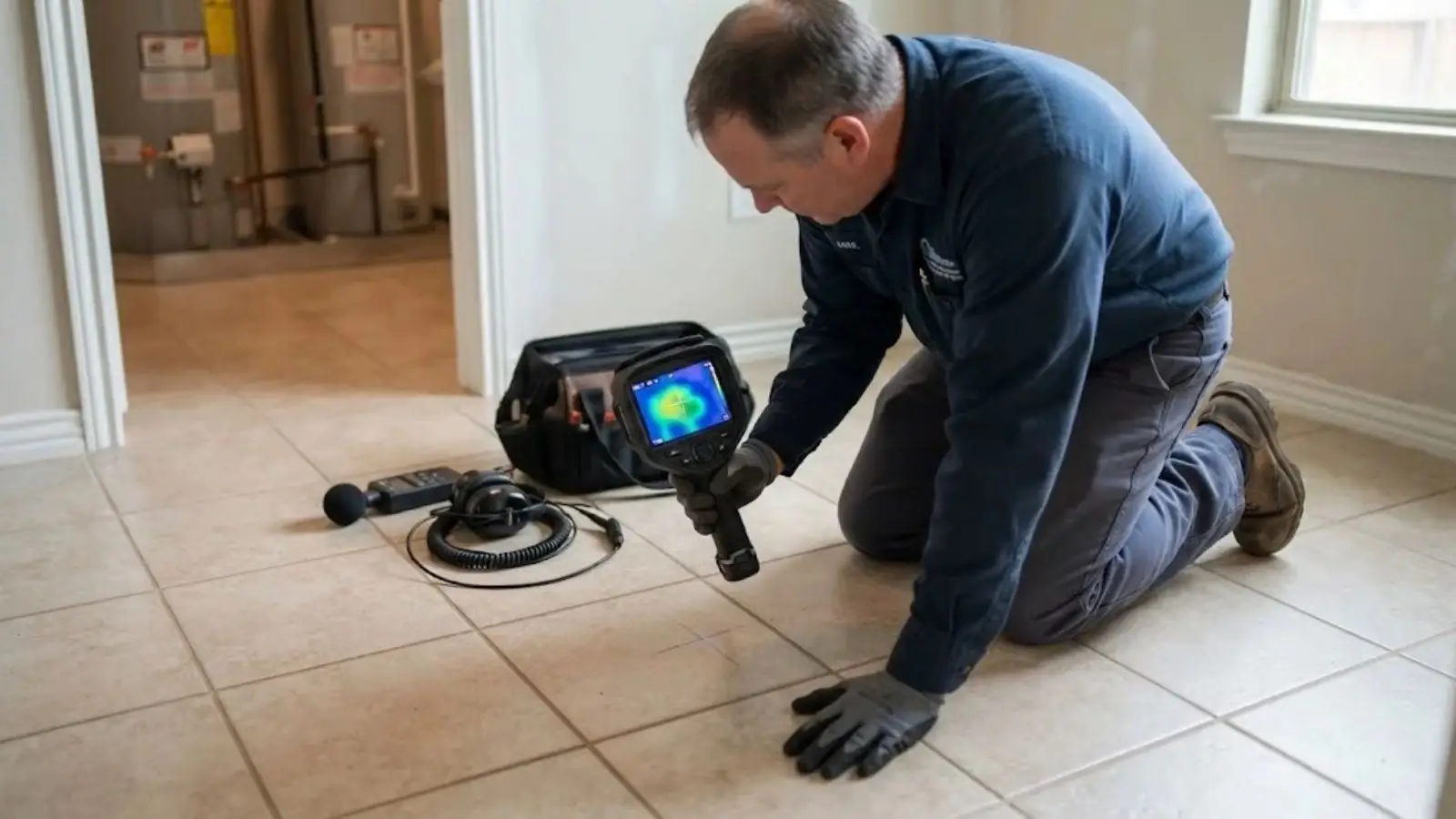
Leak detection means locating a hidden water leak without opening walls or floors at random. The plumber uses acoustic listening, pressure testing, thermal imaging and moisture readings to narrow the leak to a small area, then repairs only that spot.
Start with what you can see
This is the cleanest sign of a leak between the meter and the house, or inside the house.
A running toilet, a leaking irrigation valve or a hidden pipe leak can all raise usage fast.
A ceiling stain points to a supply or drain leak above. A warm slab spot can mean a hot line leak.
Emergency: water you can hear or see right now
Water running inside a wall, ceiling or crawl space is urgent. Shut the main valve and call the 24/7 line. After-hours dispatch is available, and the plumber will bring listening and thermal tools to trace the source.
What to do while you wait
- Shut the main water valve, usually near the meter or where the line enters the house.
- Turn off power to wet rooms at the breaker if water is near outlets or fixtures.
- Open a faucet at the lowest point to relieve pressure and drain the line.
- Take photos of stains and the meter reading for the plumber and your insurer.
Meter still running, or a high water bill
Shakopee Public Utilities states that homeowners are responsible for all water used, including water lost through leaks, and for the service line from the home out to and including the connection to the water main. That makes the first step simple. Turn off every fixture, read the meter, wait fifteen minutes, then read it again. If it moved, there is a leak somewhere on your side.
A plumber can then isolate the main line from the house plumbing to see which side leaks. A leak between the meter and the house is a buried line leak and may need excavation. A leak inside the house is usually found with a listening probe and a thermal camera.
How a plumber finds the leak
| Tool | What it finds | Where it works best |
|---|---|---|
| Acoustic listening probe | The sound of water escaping under pressure | Pipes in walls, slabs and under floors |
| Thermal imaging camera | Temperature changes from wet material or a hot line leak | Walls, ceilings and slab floors |
| Pressure test | Whether a line holds pressure when isolated | Main line and branch circuits |
| Moisture meter | Dampness behind finishes | Drywall, subfloor and framing |
Slab, crawl space and under-house leaks
A warm spot or wet carpet on a slab floor can point to a leak under the concrete. Older homes around downtown Shakopee may have supply lines in a crawl space or basement ceiling that sweat or drip, and newer slab homes can have lines in the slab. Finding the exact spot lets the plumber open one small hole, not a whole floor.
Ceiling, wall and attic leaks
A ceiling stain after a rain may be a roof problem and not plumbing. A stain that grows with no rain and appears below a bathroom is more likely plumbing. A plumber checks supply and drain lines above the stain and tells you when a roofer is the right call.
Irrigation, yard and pool leaks
Irrigation systems can leak underground for weeks, and a spike in a summer bill is a clue. Shakopee Public Utilities runs seasonal watering restrictions from May 1 through September 30, so unusual use outside those rules can raise questions with the utility. Pool and spa leaks are a smaller part of this work and are handled as a one-off check.
What affects leak detection cost
You get a clear price before work starts. Many policies cover the water damage from a sudden leak but not the cost of finding or fixing a long-term one, so ask your insurer. Want your real number? Call the 24/7 line. If a leaking pipe has already burst, see burst pipe repair.
Once a leak is found, the repair follows the Uniform Plumbing Code (UPC) as adopted in Minnesota Rules chapter 4714, and some repairs may need a permit from the City of Shakopee.
In townhomes and apartments the first step is often knowing who owns the shutoff, which our Windermere page walks through.
Leak detection questions
Yes. The 24/7 line is open at any hour and a plumber is dispatched for active leaks. Shut off the main valve first, then call.
Almost always. Check that no one is running water, an ice maker is not filling and a softener is not regenerating. If the dial still moves, a plumber should isolate the line.
Shakopee Public Utilities states that the homeowner is responsible from the house out to and including the connection to the main. Ask the utility if your situation is unusual.
Not at first. The plumber narrows the leak with listening and thermal tools so any opening is small and targeted.
Yes. Commercial leak work follows the same process, and after-hours visits can be scheduled around business hours. See commercial plumbing for more.
Not sure which answer fits your situation? Call the 24/7 line and describe what you see.