
Signs the main sewer line is clogged
A main line clog affects the whole house at once. Toilets gurgle when the washer drains, a shower fills your tub with gray water, or a basement floor drain bubbles. If any of that is happening now, stop using water and call the 24/7 line. A plumber is dispatched at any hour with a cable machine, and a jetter is available when the line calls for it.
Sewer line cleaning is the removal of blockages in the main drain, the large pipe that carries all of the house wastewater out to the street. It differs from clearing a sink because the pipe is longer, buried and usually reached from a cleanout.
Finding the cleanout
Most homes have at least one cleanout, a capped pipe that gives direct access to the main. It is often in the basement near the stack, in the garage or outside near the foundation. Knowing where it is can save time, and a plumber can access the line without removing a toilet. If you cannot find one, the plumber will look for the best entry and may recommend adding a cleanout.
What clogs a sewer line
- Roots. Fine roots enter at joints, thicken and catch paper and solids.
- Grease. Cooking fat cools in the pipe and builds a layer that narrows it.
- Wipes. Wipes sold as flushable often do not break up and form a mat.
- Bellies. A sag holds water and solids, and the line clogs where it dips.
- Foreign objects. Children, tools or construction debris can lodge in a line.
How the plumber clears it
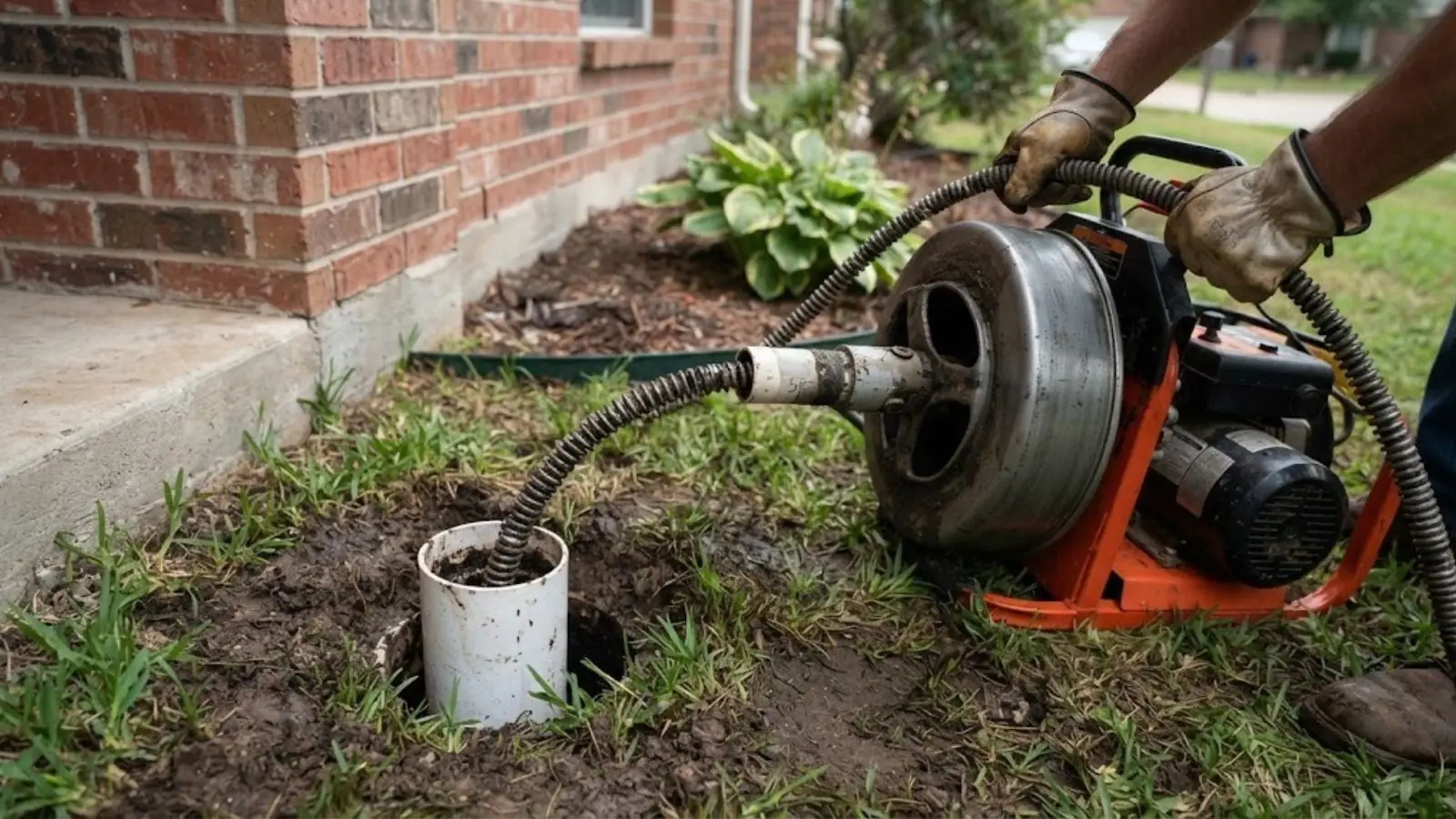
The plumber starts with a cable machine and a cutting head sized to the pipe. The cable cuts through roots and paper, and then the plumber checks that water flows freely. If the line was only opened or grease remains, a hydro jet cleans the walls. A camera pass afterward shows whether the pipe is sound or needs sewer line repair.
Roots and the older lots around downtown
Mature trees are common in the older parts of Shakopee, and root intrusion is the most common cause of repeat main line calls on clay or cast iron laterals. A cable can cut roots back, but it does not stop regrowth. If the camera shows roots at the same joint twice, a lining or spot repair at that joint is cheaper than cleaning every year.
A preventive schedule
| Home or business type | Cleaning interval to consider | Why |
|---|---|---|
| Older home with mature trees and clay lateral | Every 1 to 2 years | Roots regrow |
| Newer PVC lateral, no history of clogs | Only when symptoms appear | Little to clean |
| Restaurant or kitchen lines | Quarterly or monthly | Grease builds fast |
| Rental with multiple tenants | Annually, plus on request | Wipes and misuse are common |
Cleaning versus repair
Cleaning is the right call when the pipe is whole and something is simply stuck in it. If the camera shows a collapse, a long offset or a deep belly, cleaning only buys time. A plumber who tells you that clearly is saving you the cost of a third clog.
What affects sewer cleaning cost
You will hear the price for the tool and the time before the cable goes in. Policies often exclude clogs from roots or wear, but may cover backup damage with an endorsement, so check yours. Related services include drain cleaning and sewer camera inspection. We also serve Savage and Prior Lake.
Cleaning is maintenance, but any repair that follows is governed by the Uniform Plumbing Code (UPC), which Minnesota adopts in Rules chapter 4714.
Sewer cleaning questions
Yes. Calls at any hour are answered on our 24/7 line, and a plumber heads out with a cable machine. Describe which drains are slow so the right tool comes along.
The air that should leave through the vent is being pushed back through the nearest open trap. That points to a partial blockage in the main line or a blocked vent.
It depends on pipe material, trees and use. A line with no history of clogs may never need scheduled cleaning, while a root-prone clay line may need it every year or two.
Yes. Many wipes do not break apart like paper and tangle with roots and grease. Throw them in the trash.
Yes. Businesses can book after hours so the line is clear before opening. See commercial plumbing for details.
Not sure which answer fits your situation? Call the 24/7 line and describe what you see.