
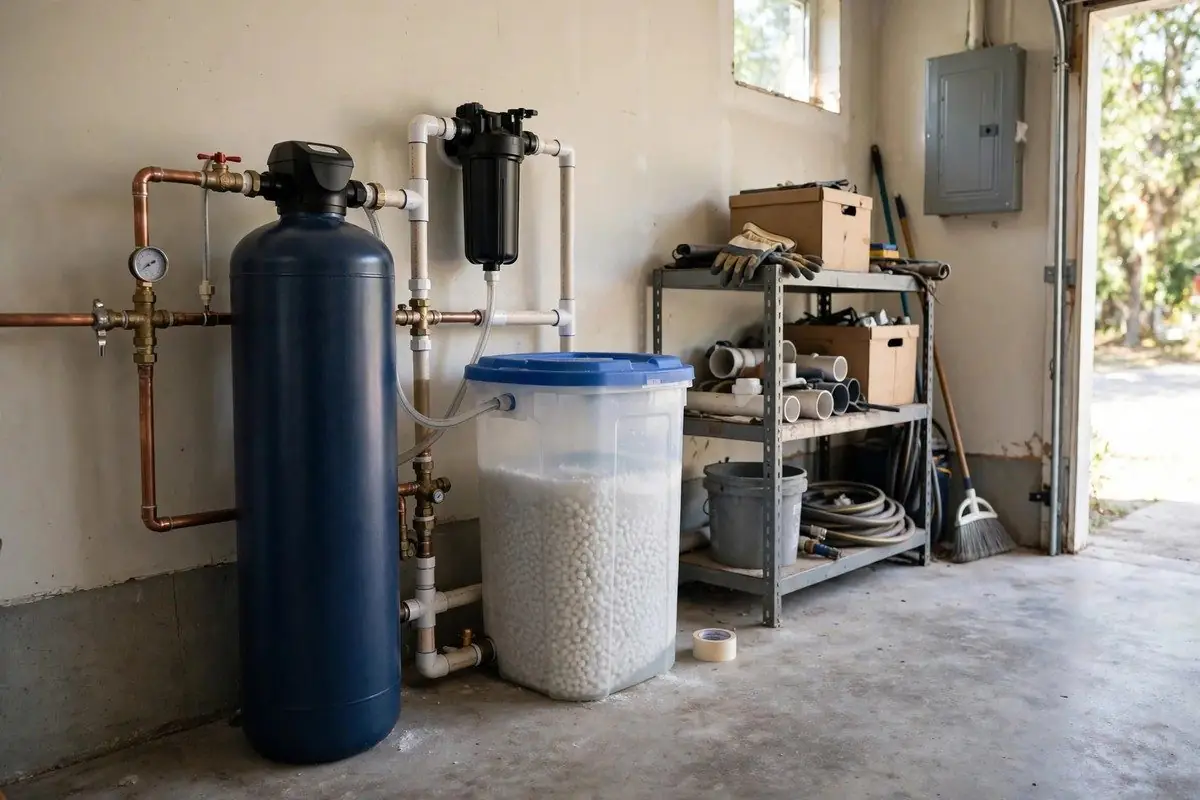
A water softener removes calcium and magnesium from the water, the minerals that cause scale. In Shakopee, where city water is rated at 21 grains per gallon by Shakopee Public Utilities, those minerals are what clog aerators, crust shower heads and shorten the life of water heaters.
What 21 grains per gallon means
The utility classes 21 grains per gallon as very hard. Hardness is measured in grains per gallon, where more grains mean more scale. That is more than three times the level at which many water treatment guides start recommending a softener. The SPU residential page says hard water requires more soap and detergent and can cause scale buildup.
Your own tap can differ from the average, so test it. A simple strip or a lab test gives your number, and the softener should be set to it. Ask Shakopee Public Utilities for its annual water quality report to see the latest data.
| Town | Reported hardness | Source |
|---|---|---|
| Shakopee | 21 grains per gallon | Shakopee Public Utilities residential page |
| Prior Lake | 19.3 grains per gallon (330 ppm) | City of Prior Lake drinking water page |
| Chanhassen | 21 grains per gallon | City of Chanhassen water treatment page |
| Chaska | 26 grains | City of Chaska drinking water report |
| Eden Prairie | About 5 grains per gallon after the city softens its water | City of Eden Prairie drinking water FAQ |
| Savage | Not reported in the city report we reviewed | Ask the City of Savage for its hardness figure |
The difference between towns matters when you shop. A softener sized for Shakopee water would be oversized in Eden Prairie, which softens its public supply. Eden Prairie says residents do not need a softener to protect pipes and appliances.
Signs your home needs one
Common hard water signs
- White crusty deposits on faucets, shower heads and kettles.
- Soap that does not lather and leaves film on skin and dishes.
- Spots on glasses even after the dishwasher.
- A water heater that rumbles or runs out of hot water early.
- Stiff laundry and dingy whites.
Softener, filter or both
Exchanges hardness minerals for sodium or potassium and regenerates with salt.
Reduces sediment, chlorine taste or other items depending on the media.
A small system under the kitchen sink for drinking water.
A softener and a filter do different jobs. A softener does not remove chlorine or the taste from the supply, and a sediment filter does not remove hardness. The plumber will ask what you want to fix before recommending equipment.
How a softener is installed
- Choose the location. Near the main water line, a drain, an outlet and enough room for the salt bin.
- Plumb in the bypass. The softener gets a bypass valve so it can be isolated for service.
- Run the drain line. The regeneration water goes to a floor drain or standpipe with an air gap.
- Set the hardness and size. Program the controller from your test result and household size.
- Leave outdoor taps and the kitchen cold tap alone. Many homeowners keep one cold tap unsoftened for drinking and irrigation.
Repair and service
Softener problems include a stuck valve, resin that is worn out, a brine tank with a salt bridge, and a controller that has lost its settings. A plumber can check the head, the injector, the drain line and the resin. A softener that is more than 15 years old often does better replaced than repaired.
Sodium and other things to consider
A salt-based softener adds a small amount of sodium to the water. People on sodium-restricted diets should ask a doctor, and potassium chloride is an alternative. The Eden Prairie city guidance also notes that softened water is not ideal for houseplants or irrigation, so many homes leave outdoor taps unsoftened.
What affects water softener cost
A water softener is a planned job, and the plumber gives a price after seeing the location. Insurance does not cover a softener install. A well-set softener also helps a tankless water heater and a new tank last longer. If your faucets already show scale, faucet repair can address the parts.
Softener drain connections and air gaps follow the Uniform Plumbing Code (UPC) as adopted in Minnesota Rules chapter 4714.
Softener questions
Shakopee Public Utilities rates it at 21 grains per gallon on its residential page, which it classes as very hard.
It is not required, but with 21 grains per gallon a softener reduces scale on fixtures and heaters. Test your own tap to confirm.
Yes. A plumber can diagnose valve, resin, brine tank and controller problems and tell you if it is worth repairing.
No. A softener removes hardness minerals. A carbon filter handles chlorine and taste.
The 24/7 line is available for leaks and flooding from any water equipment. Planned installs and servicing are booked in regular hours.
Not sure which answer fits your situation? Call the 24/7 line and describe what you see.