
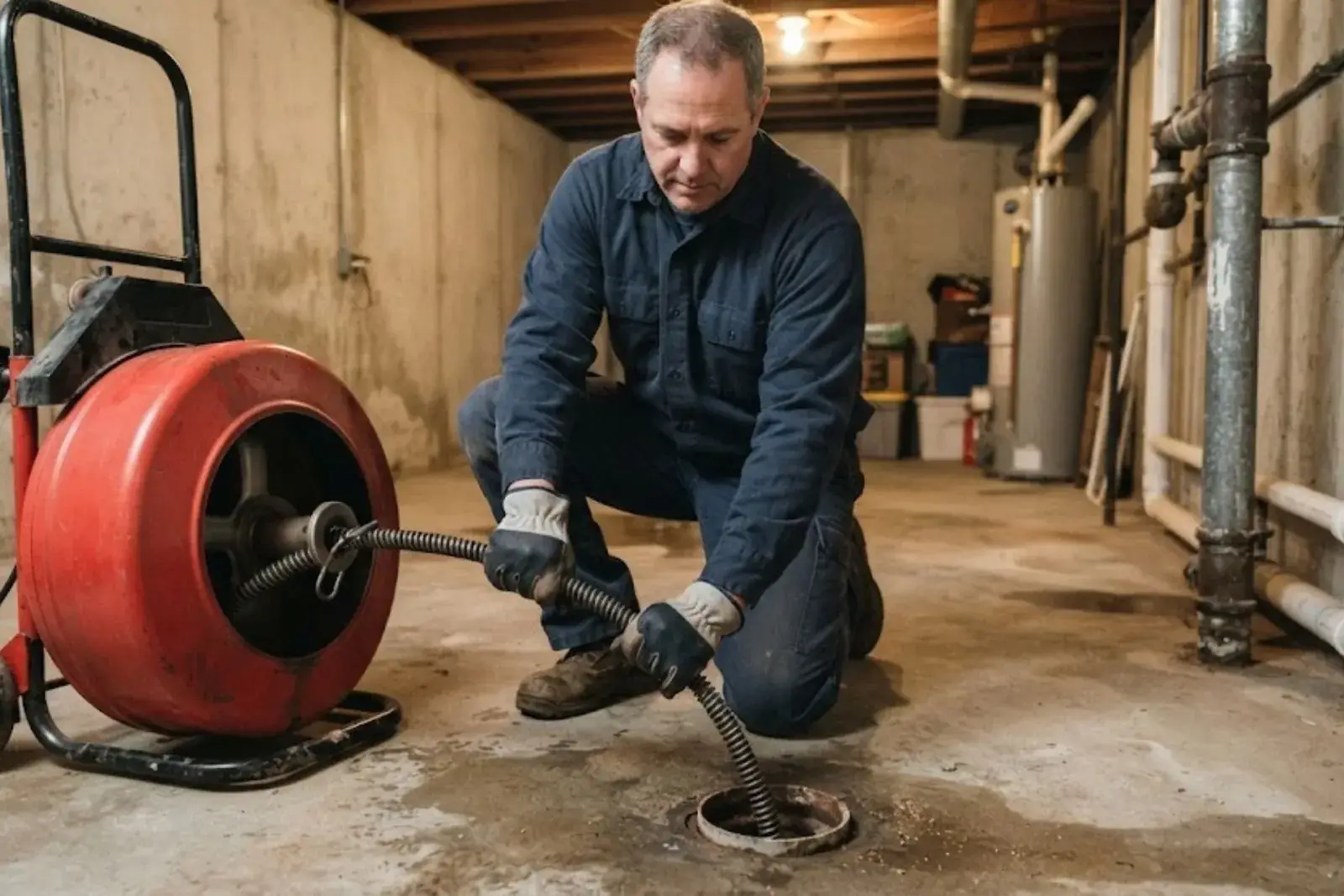
A drain that will not clear at 10 p.m. does not have to wait for morning. Our 24/7 line sends a plumber to Shakopee homes and businesses for backed-up sinks, tubs, floor drains and main lines. While you wait, stop running water, do not flush, and move anything valuable off the floor near your lowest drain.
Drain cleaning means removing a blockage from a drain line, either with a cable machine (snaking) or with high-pressure water (hydro jetting), so wastewater flows freely again. The right tool depends on what is blocking the pipe and how far down the line it sits.
When a clogged drain is an emergency
Not every slow drain needs a midnight visit, but a few situations should not wait. The cards below show how most callers sort their situation before they dial.
What to do while you wait for the plumber
- Stop using every sink, tub, shower, dishwasher and washing machine in the house.
- Do not flush toilets if water is rising in the lowest drain, because the main line may be blocked.
- Skip chemical drain openers. They can sit in the pipe and burn the plumber who opens it.
- Move rugs and boxes away from the lowest floor drain, usually in the basement.
Why drains clog in Shakopee homes
Shakopee Public Utilities rates the city water at 21 grains per gallon, which it classes as very hard. Hard water leaves mineral scale on pipe walls over the years, so a drain line has less room for hair, soap and grease to pass. If your clogs keep returning in the same tub or sink, scale and soap buildup is a common reason, and a deeper cleaning usually lasts longer than a quick snake.
Kitchen lines clog with grease and food that cool and harden inside the pipe. Bathroom lines clog with hair bound together by soap. Older homes around downtown Shakopee can also have clay or cast iron lateral lines where roots find joints, which is why a clog on the main line often needs a camera look before anyone promises a fix. The sewer camera inspection page explains how that works.
Snaking or jetting: how the plumber chooses
| Method | Best for | Limits |
|---|---|---|
| Hand or drum snake | Single-fixture clogs, hair, a toy or wipes stuck near the trap | Punches a hole through the blockage but can leave grease on the pipe wall |
| Cable machine with cutting head | Main line clogs and root intrusion | Cuts roots back but does not scour the whole pipe |
| Hydro jetting | Grease, scale and repeat clogs, plus commercial lines | Not for a collapsed or badly cracked pipe, which needs a camera first |
Most residential clogs clear with a cable. When a line clogs again within a few weeks, the plumber will usually recommend hydro jetting because it cleans the pipe wall instead of only opening a channel.
Kitchen sink clogs
The kitchen sink is the most common call for drain work after the main line. A double sink that drains slowly on one side and backs up on the other usually points to a blockage past the shared tailpiece, not inside the disposal. Dishwasher drain hoses tie into the same line, so a dishwasher that leaves standing water is often part of the same clog.
Grease is the usual cause, along with coffee grounds and starchy food that swell in the trap. The plumber removes the trap, clears the wall pipe with a cable, and checks that the vent is not part of the problem. If the sink also has a disposal that hums or jams, the garbage disposal repair team handles that in the same visit.
Tubs, showers and floor drains
A tub that drains slowly is almost always hair and soap in the trap or just past it. Floor drains in basements and garages catch lint, sediment and sometimes sump overflow, and they are the first place a blocked main line shows itself. If water comes up in a floor drain when you run the washing machine, that is a main line signal, not a floor drain problem.
When the drain line itself leaks
Occasionally a clog is not the whole story. A damp ceiling under a bathroom, a wet spot on the basement wall near a stack, or a smell with no visible water can point to a leaking drain line. The plumber finds it with a camera and a listening check, and repairs the pipe section rather than clearing it over and over.
What affects the price of drain cleaning
You get a clear price before work starts, and the plumber will say if the clog points to a bigger problem. Homeowner insurance usually covers sudden pipe damage but often excludes slow maintenance clogs and tree root intrusion, so ask your carrier before assuming. Want your real number? Call the 24/7 line.
We also dispatch to Prior Lake, Savage and Chaska for the same work.
Drain and vent sizing follow the Uniform Plumbing Code (UPC) as adopted in Minnesota Rules chapter 4714, so a plumber who finds an undersized or unvented line will tell you what the code expects.
Drain cleaning questions
Yes. The line is open 24/7, including holidays, and a plumber is dispatched to your Shakopee address as soon as you call. The dispatcher explains timing on the call for non-urgent clogs.
It is better not to. Chemical openers can sit in a stopped pipe and splash back on the person working on it. Plain hot tap water and a plunger are the safest thing to try.
If only one sink or tub is slow, the clog is probably local. If a toilet gurgles when the shower drains, or a basement floor drain bubbles when you run the washer, the main line is the likely culprit.
A cable opens a channel but may leave grease or scale on the pipe wall. Repeat clogs are usually a sign to try hydro jetting or to check the pipe with a camera for roots or a belly in the line.
Yes. Landlords and property managers can call for tenants, and restaurants and shops can book after-hours work. Commercial grease lines often need jetting on a regular schedule.
Not sure which answer fits your situation? Call the 24/7 line and describe what you see.