
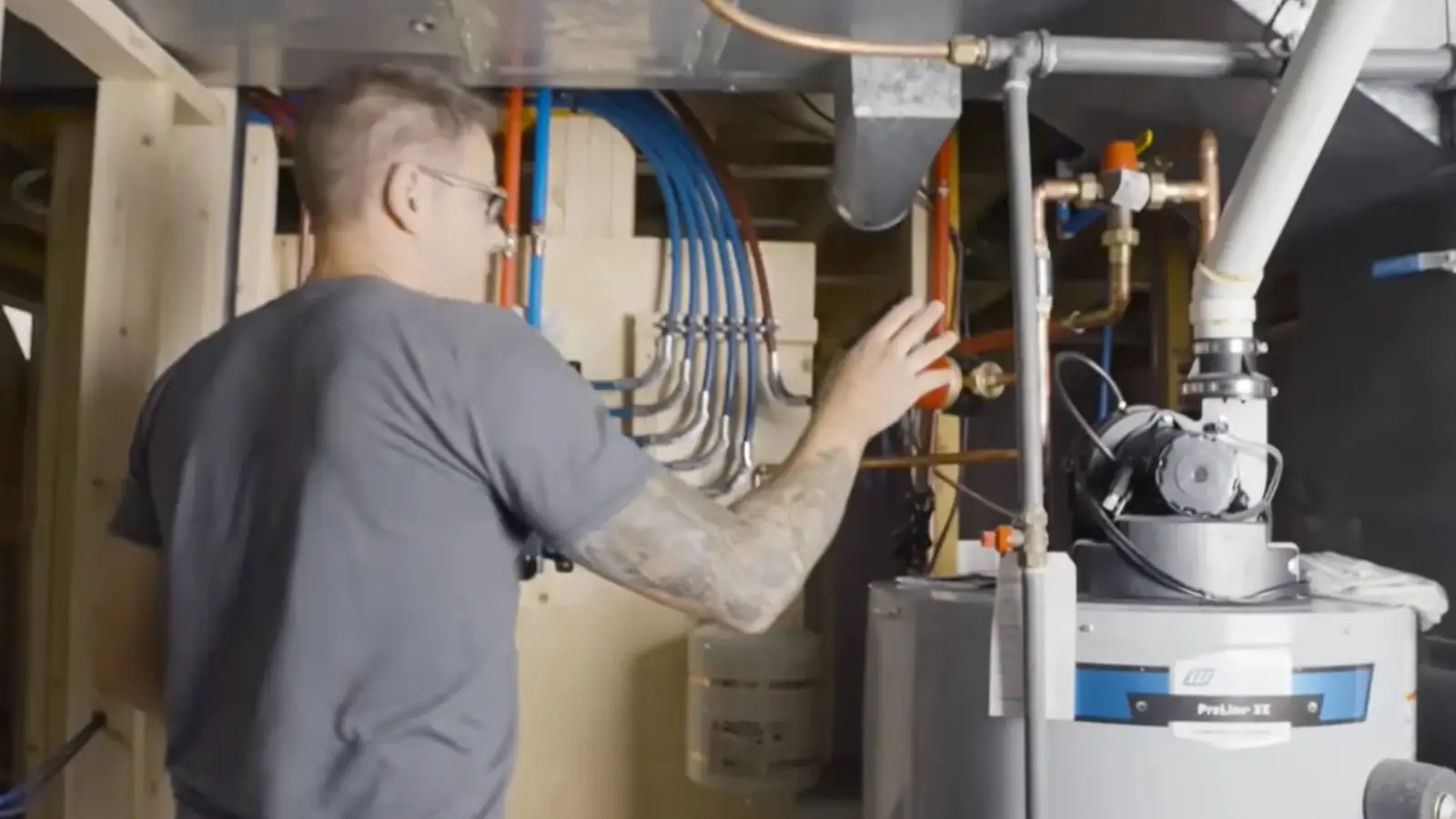
Water heater installation covers setting a new tank or tankless unit where none exists or where the layout is changing, then connecting water, fuel, venting, drain and safety valves. It differs from a replacement because the plumber often has to plan the location, run new lines and check code items before the heater goes in.
This page is for planned work in new builds, basement finishes, additions and upgrades. If your current heater has already failed, start with water heater replacement instead.
Where Shakopee homes put the heater
The city doubled in population in the ten years after the Bloomington Ferry Bridge opened in 1995, according to the City of Shakopee history page, so many homes were built in that boom with heaters in basements or utility rooms. Older downtown homes may have a heater in a basement with low headroom and a clay or galvanized supply. Each layout changes the work.
Basement installs need a floor drain or a way to pipe the relief valve discharge to one. Garage installs need the burner raised or protected from vehicle vapors. Closets need clearance and combustion air. The plumber checks each before quoting.
Gas, electric or tankless: pick before the install day
Lower running cost where gas is available, needs a vent and a gas line sized for the load.
Simple to place with no vent, but needs a dedicated circuit and costs more to run.
Takes less floor space and heats on demand, but needs larger gas or electric supply and regular descaling. See tankless water heaters.
What goes into a proper install
- Site check. Measure the space, find the shutoff valves and confirm gas line size or breaker rating.
- Set and level the tank. Place it on a stable pad with room to service it.
- Connect water. Use flexible connectors or copper with shutoff valves and a dielectric fitting where metals differ.
- Run the vent or wiring. Gas units vent through a flue or direct vent, and electric units get a rated circuit.
- Add safety items. Install an expansion tank where the plumber finds a closed system, plus a relief valve and discharge pipe.
- Test. Fill, purge air, light or power up and check for leaks and combustion on gas units.
Expansion tanks and pressure in a closed system
When a home has a check valve or a pressure reducing valve at the main, heated water has nowhere to expand. That raises pressure in the plumbing and can make a relief valve drip. An expansion tank gives the water a place to go, and the plumber can check the house pressure with a gauge before and after the install.
Hard water and the new heater
Shakopee Public Utilities lists the city water at 21 grains per gallon, so scale will start working on a new heater from day one. A water softener upstream protects the tank and the elements, and a yearly flush is a cheap habit for tanks that are not protected. See water softener installation if you are considering the upstream fix.
Planned does not mean slow
The dispatcher tells you on the call what timing is possible, and installs are also booked around work schedules. We recommend not waiting until the old tank leaks, because a planned install lets you choose the unit instead of taking what is on a truck.
What affects installation cost
You get a clear price before work starts. Insurance does not usually pay for a planned upgrade, but some utility programs offer rebates on efficient models, and you can ask your electric or gas provider. Want your real number? Call the 24/7 line.
New heater work is covered by the Uniform Plumbing Code (UPC), which Minnesota adopts in Rules chapter 4714 and the Department of Labor and Industry administers, so ask who pulls any required permit.
What to do before the installer arrives
- Clear a path to the heater and move stored items back.
- Locate the main water shutoff and confirm it turns.
- Know where the gas valve or breaker for the heater is.
- Plan to be without hot water for several hours.
Installation questions
A straightforward tank install usually fits in a few hours. New venting, gas line changes or wiring add time, and the plumber will tell you which applies.
Yes. Plumbers can set and connect a heater in a finished basement project, an addition or a new build, and can coordinate around other trades.
The plumber checks whether the home needs one and adds it when a closed system is found. It is one of the items listed in your quote.
Permit rules vary, so ask the City of Shakopee building inspections office. The plumber will tell you what the job normally involves.
Yes. Haul-away of a replaced unit can be added and will be named in your quote.
Not sure which answer fits your situation? Call the 24/7 line and describe what you see.