
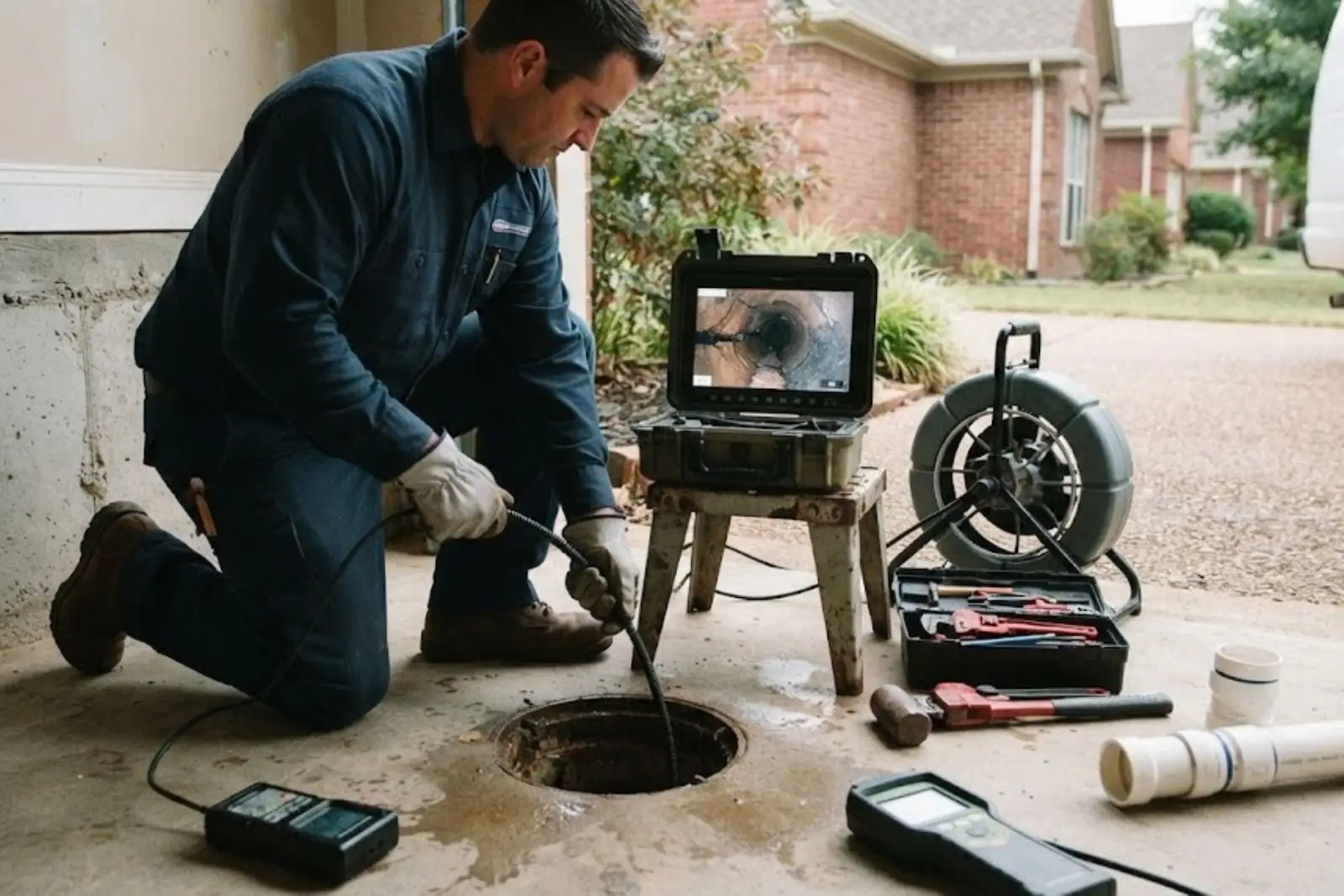
A sewer camera inspection feeds a waterproof camera on a flexible cable through a cleanout or a vent, records the inside of the pipe on a monitor and notes the depth and distance of any defect. It replaces guessing with a picture of the roots, cracks, bellies or scale causing your trouble.
What the camera shows
| What you see on screen | What it means | Likely next step |
|---|---|---|
| Fine roots at a joint | Roots entered through a gap | Cut with a cable or jet, then watch or seal |
| Water pooling in a dip | A belly or sag in the line | Replacement of that section if it keeps clogging |
| Offset joint | Two pipe ends no longer align | Spot repair |
| Crack or hole | Pipe has broken | Spot repair or lining |
| Heavy scale or grease | Surface buildup | Hydro jetting |
The plumber pauses on any defect, measures how far it is from the cleanout and, if needed, locates it above ground with a receiver so a repair can be planned. You will see the video and hear the explanation, not just a verdict.
When a camera visit is worth booking
- A drain clogs more than once in a few months, even after cleaning.
- You are buying an older house and want the lateral checked before closing.
- Backups or gurgling appear only during heavy rain or after the washer runs.
- A big tree stands near the line, or you plan to plant one.
- You are about to spend money on a repair and want to see the problem first.
A planned camera visit is not an emergency, but it is often what turns an emergency into a plan. If you have sewage coming up right now, start with emergency sewer line repair and the camera will be part of that visit.
Buying an older home in or near downtown Shakopee
The City of Shakopee was platted in 1854 and incorporated in 1857, so the downtown area includes older buildings and older utility connections. A house with a clay or cast iron lateral can look perfect upstairs and still have root damage underground. A camera inspection before closing costs a small fraction of a sewer replacement and gives you leverage in a negotiation.
Newer subdivisions with PVC laterals are usually easier to read, but builders sometimes leave debris, bellies or crushed sections from grading. The camera finds those too.
Inspection pairs well with cleaning
A camera is more useful on a clean pipe, so the plumber may suggest hydro jetting or a cable pass first when the line is full of grease or roots. You do not have to pay for both unless the picture needs it, and the plumber will say so.
Locating the line
Many homes do not have a clear map of the sewer lateral. With a transmitter on the camera head, a receiver above ground marks the line and its depth, which helps a landscaper avoid it and helps a repair crew dig in the right place. This is also useful before building a deck, fence or addition.
What you receive
After the visit
- A recording or screenshots of any defects.
- The distance and depth of each defect from the cleanout.
- A plain explanation of what each one means.
- A written price for any repair the plumber recommends.
What affects inspection cost
The inspection price is quoted when you book, and any repair price comes after you have seen the video. Insurance seldom pays for inspections, though some policies reimburse a camera check that finds a covered failure, so ask. Call the 24/7 line to schedule.
A camera inspection shows the condition of the pipe, and any repair it leads to falls under the Uniform Plumbing Code (UPC) as adopted in Minnesota Rules chapter 4714.
Older streets near the river are a common place to ask for this, and our page for Downtown Shakopee explains what we do and do not know about homes there.
Inspection questions
A typical inspection of a home lateral takes under an hour once the cleanout is open. Heavy buildup, a long run or locating work adds time.
Yes. Many buyers schedule a camera check during the inspection period. Ask for the video and the distance of any defects so your agent can use it.
No. The camera is on a flexible cable and moves gently through the pipe, which is why it is the standard first look.
A cleanout is the best entry point. Without one, a plumber may go in through a roof vent or by pulling a toilet, which takes more time.
No. It is just as useful as a planned check on an older home, before a repair, or when clogs keep returning.
Not sure which answer fits your situation? Call the 24/7 line and describe what you see.