
Some boilers heat both your home and your domestic hot water, and a diverter valve decides where the heat goes. It is a small part that does a big job, and when it fails the symptom is usually one-sided. Either the radiators work and the hot water does not, or the reverse.
This guide explains what a diverter valve does, how to recognize a failing one and what a plumber does to fix it. It also covers what you can safely check yourself.
What a diverter valve does
A combination boiler or a boiler with an indirect hot water tank has two jobs, space heating and domestic hot water. The diverter valve is a three-way valve that sends hot water from the boiler either to the heating circuit or to the hot water supply. It is usually driven by an electric actuator that opens when a call for hot water comes in.
Because it moves back and forth thousands of times, it wears. Internal seals harden, the actuator motor weakens and mineral deposits can stick the stem in place.
Signs a diverter valve is failing
| Symptom | What it suggests |
|---|---|
| Heating works, hot water is lukewarm or cold | Valve stuck toward the heating side or actuator not moving |
| Hot water works, radiators stay cold | Valve stuck toward the hot water side |
| Radiators warm up when you run a hot tap | Valve leaking by, sending some flow to the wrong circuit |
| Clicking or humming from the valve | Actuator trying to move a stuck stem |
| Pressure drops or water drips near the valve | Failing seals or a cracked body |
| Boiler cycles on and off without reaching temperature | Flow not going where it should |
Safe checks before you call
What you can do without opening the boiler
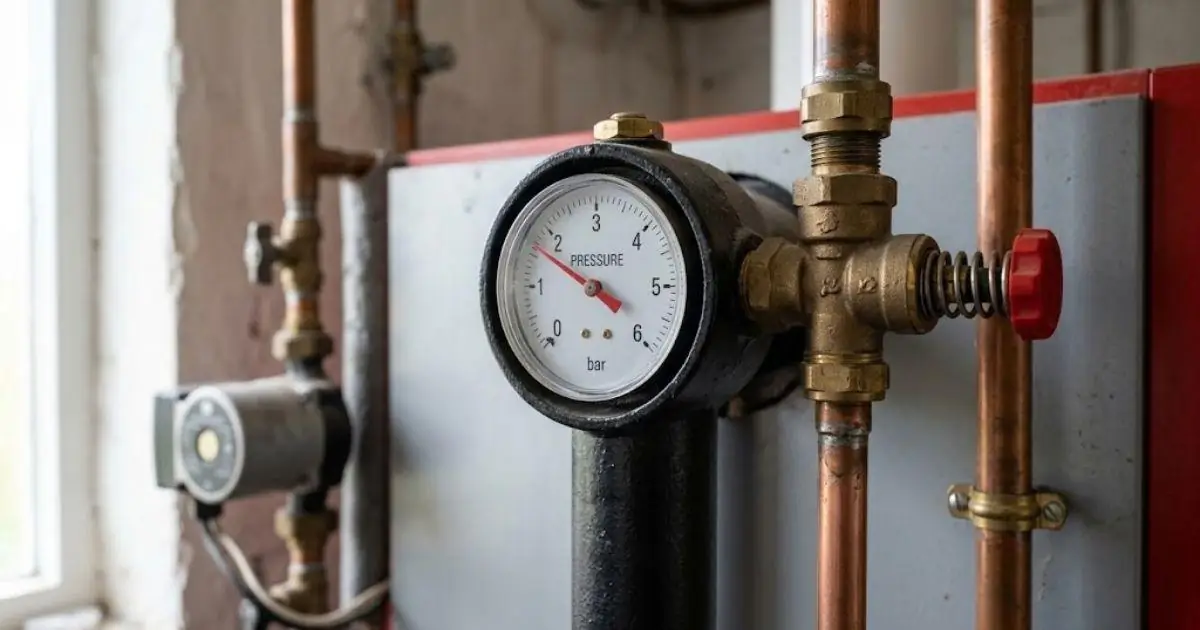
- Check the boiler pressure gauge. Low pressure causes similar symptoms and may only need a top-up per the manufacturer.
- Look for error codes on the display and write them down.
- Feel the pipes above the valve. A hot pipe on one side and a cold pipe on the other can show where the flow stops.
- Reset the boiler once, following the manual, and note whether the symptom comes back.
- Check that the thermostat is calling for heat and the hot water setting is on.
Anything inside the casing, including the burner, gas valve and sealed circuit, is for a licensed plumber or heating tech. Water, gas and combustion air are all involved, and a mistake is expensive or dangerous.
What the repair involves
- Diagnose. The plumber checks the actuator signal, the valve stem and the pressure to confirm the diverter is the cause.
- Isolate and drain. The boiler is shut down and the section is isolated and drained.
- Replace the actuator or the valve. Sometimes only the actuator motor needs swapping. If the valve body is worn or scaled, the whole valve is replaced.
- Refill and bleed. The system is refilled, air is bled from the radiators and the pressure is set.
- Test both circuits. The plumber calls for heat and for hot water and checks that each works without the other leaking by.
A boiler that is also old, noisy or leaking may be worth a wider look. Our boiler repair page covers common failures and when replacement is more sensible than another repair.
Combination boiler or boiler with a tank?
Not every boiler has a diverter valve. A combination boiler heats domestic water on demand and uses a diverter to switch between heating and hot water. A boiler paired with an indirect tank often uses zone valves or a circulator for the tank instead, so the failing part may be a different one.
Tell the dispatcher what kind of system you have and what the manual or the label says. If you are not sure, a photo of the boiler and its nameplate helps the plumber bring the right parts.
Write down the make, model and age of the boiler before you call, along with any error code. That short list lets the dispatcher match parts and a plumber to the job, and it often saves a second trip.
Local notes for Shakopee boilers
Shakopee Public Utilities rates city water at 21 grains per gallon, which it calls very hard. In a boiler with a combined hot water circuit, scale on the heat exchanger and valve stems is a common reason parts stick, and a plumber can check the domestic side during any service.
Boiler no-heat calls matter more in Minnesota winters. The City of Shakopee building inspections page lists a Plumbing Permit, so ask the city or your installer whether a boiler or valve replacement needs one.
The Minnesota Department of Labor and Industry is the licensing agency for plumbers, and its Check a License tool lets you confirm who you are hiring.
Source type: Shakopee Public Utilities residential water page, City of Shakopee building inspections page and Minnesota Department of Labor and Industry
Keep it from happening again
- Have the boiler serviced once a year, before the heating season.
- Ask the plumber to test the diverter and actuator during the service.
- Keep the water pressure in the range the manufacturer shows on the gauge.
- Treat hard water, because scale shortens valve life.
- Replace old boilers before they fail on the coldest night.
If your boiler goes cold in a deep freeze, treat it as urgent because pipes can freeze when the heat stops. We serve Chaska and Savage from the same 24/7 line.
Domestic water piping on a boiler follows the Uniform Plumbing Code (UPC) as adopted in Minnesota Rules chapter 4714.
Questions we hear
One circuit works and the other does not, or the radiators warm up when you run a hot tap. A plumber can confirm by testing the actuator and the stem.
Sometimes only the actuator motor needs replacing. If the valve body is scaled or leaking, the whole valve is replaced.
Scale can stick the stem and wear seals, so hard water areas like Shakopee tend to see more valve trouble.
No heat in a Minnesota winter is urgent, so call right away. If only hot water is affected, it can usually wait for the next day.
If the boiler is old and the valve failed, ask your plumber for a condition check. A new valve in a failing boiler can be money spent on a short remaining life.
Not sure which answer fits your situation? Call the 24/7 line and describe what you see.