A clogged toilet is one of the most common household plumbing calls, and most of them clear in minutes with the right tool. The key is to avoid flushing again, because a second flush on a blocked line floods the bathroom. Stop, look at the water level and follow the steps.
If the toilet is the only fixture affected, this guide should solve it. If other drains are gurgling or backing up, jump to the section on main line signs.
Before you plunge
Prep in two minutes
- Do not flush again. If the bowl is near the rim, lift the tank lid and close the flapper, or turn the stop clockwise.
- Put towels or a tarp on the floor around the base.
- Wear rubber gloves.
- Use a flange plunger, which has a rubber lip that seals the toilet drain. A flat cup plunger is for sinks.
- Add enough water to cover the plunger cup if the bowl is low.
Plunge in six steps
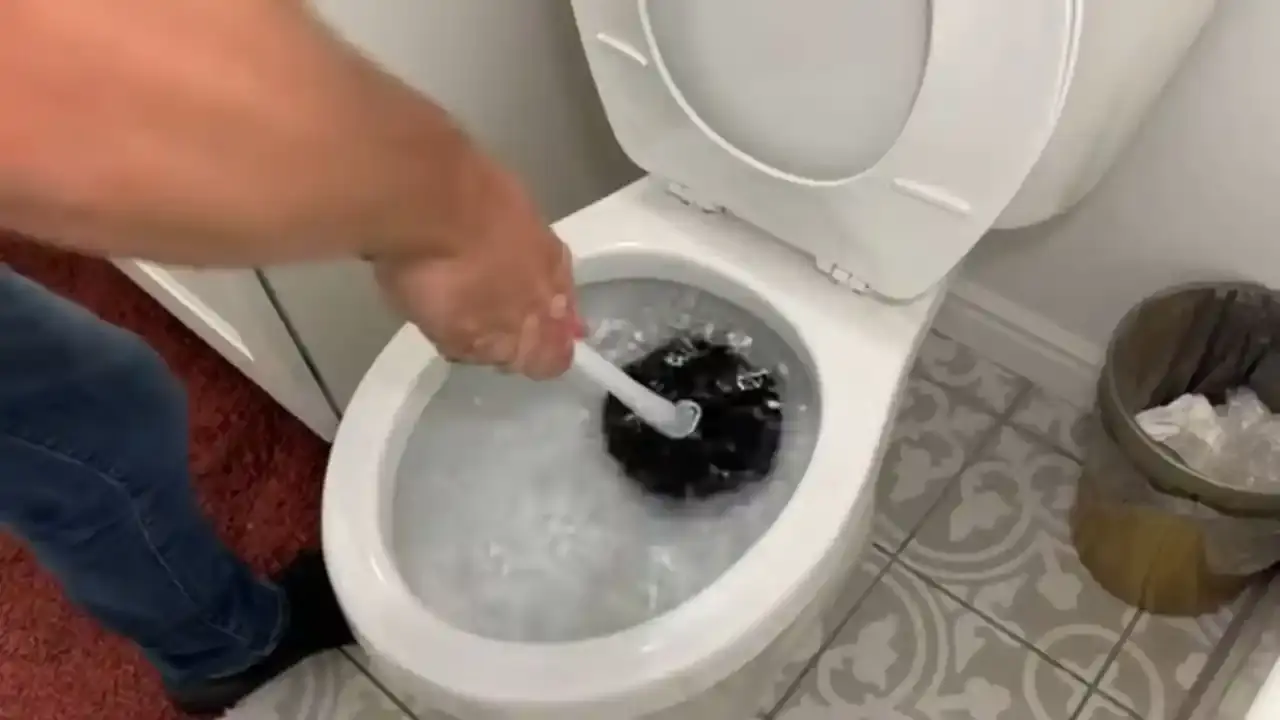
- Seat the plunger. Fit the rubber flange into the drain opening and press down gently until the cup is sealed.
- Push slowly, pull hard. The pull stroke is the one that moves the blockage. Push gently to avoid splashing.
- Repeat for fifteen to twenty strokes. Keep the seal. Do not lift the plunger between strokes.
- Break the seal. Lift the plunger. If the water drains quickly, the clog has cleared.
- Test with a small amount of water. Pour a bucket of water into the bowl, not a flush, to see if it drains.
- Flush once. If the bowl handles it, flush. If it rises, stop and use the auger.
Use a toilet auger if the plunger fails
A toilet auger, also called a closet auger, has a short cable inside a rigid shaft. Feed the tip into the drain, crank the handle slowly and push forward until you feel the clog, then work it back and forth. The shaft is shaped to protect the porcelain, which a regular drain snake can scratch.
| Tool | Best for | Avoid |
|---|---|---|
| Flange plunger | Paper and waste clogs near the trap | Using it with chemical drain cleaner in the bowl |
| Toilet auger | Stubborn clogs and objects in the trap | Forcing it against resistance, which can scratch porcelain |
| Hot water and dish soap | Soft clogs that are slow to move | Boiling water, which can crack the porcelain |
| Chemical drain opener | Nothing in a toilet | Always, because it can damage the fixture and burn skin |
Wipes labeled flushable, paper towels, cotton, feminine products and diapers do not break down the way toilet paper does. They are among the most common reasons a line clogs again and again.
Is it the toilet or the main line?
A single toilet clog affects one fixture. If the shower gurgles when you flush, the tub drains slowly or a basement floor drain bubbles, the blockage is probably in the main line. That is outside the toilet and no plunger will reach it.
Our drain cleaning page covers snaking and jetting for main lines, and toilet repair handles toilets that clog repeatedly without a clear cause.
Why toilets clog in the first place
Most clogs come from too much paper at once, a low-flow fixture that does not move waste well or an object a child dropped in the bowl. Older toilets with narrow passages clog more than modern ones with a wider trapway, and a partial blockage deeper in the line makes every clog more likely.
If a toilet clogs more than once in a month with normal use, stop treating it as a one-off. A camera look at the line, or a check of the wax ring and flange, finds the cause and ends the cycle.
Keep a plunger and a toilet auger where you can reach them, because a clog is easier to clear in the first few minutes than after it has set.
After the clog is clear, flush once and watch the refill. A bowl that refills slowly or gurgles as it drains may still have a partial blockage, and it is better to know that before guests arrive.
Local notes for Shakopee homes
Shakopee Public Utilities states that the homeowner is responsible for the water service pipe from the house out to the connection at the main. For the sewer lateral, ask the City of Shakopee where private responsibility ends, because a blockage that seems to start near the street may still be on the owner's side.
Shakopee water is rated at 21 grains per gallon, which the utility calls very hard. Scale narrows drain pipes slowly over decades, which is one reason older homes clog more easily.
If a toilet clogs repeatedly, ask a plumber to run a camera. Our sewer camera inspection page shows what to expect.
Source type: Shakopee Public Utilities residential water page
When to call a plumber
Call if the plunger and auger both fail, if the clog returns within days or if several fixtures are affected. A plumber can pull the toilet and check the flange, trap and line. We serve Savage and Eden Prairie on the same line, day or night.
Toilet drain and vent sizing follow the Uniform Plumbing Code (UPC) as adopted in Minnesota Rules chapter 4714, which matters if a toilet clogs repeatedly.
Questions we hear
Sometimes a soft clog drains slowly overnight, but it can also overflow when someone flushes. Do not rely on it.
No. Chemical openers can damage the fixture and cause burns if the bowl splashes while you plunge.
Low flush power, a partial blockage in the trap, too much paper or a line problem can all be causes. A camera shows what is in the line.
For the water line the utility says the owner is responsible from the house to the main. For the sewer lateral, ask the City of Shakopee where private responsibility ends, then call a plumber to clear it.
Do not trust the label. They do not break down like paper and often wind into clogs further down the line.
Not sure which answer fits your situation? Call the 24/7 line and describe what you see.