
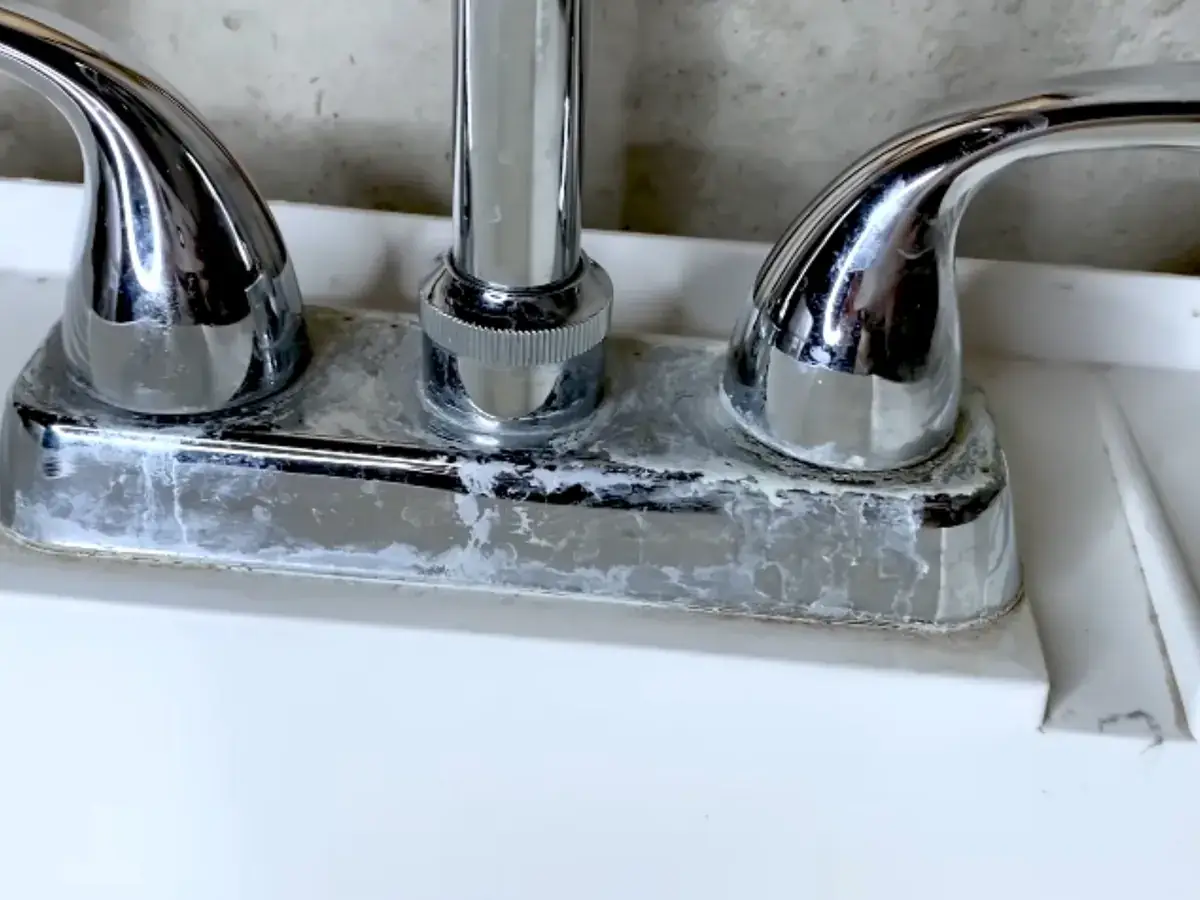
Shakopee Public Utilities lists the city water at 21 grains per gallon and classes it as very hard. That is not a safety issue, but it does affect your plumbing. Minerals in the water leave white scale on fixtures, shorten the life of water heaters and make soap and detergent work less well.
This guide explains what 21 grains means, what it does to a home and how to size a softener. It also compares Shakopee with the towns around it, because the answer is different a few miles away.
What 21 grains per gallon means
Grains per gallon measures dissolved calcium and magnesium. Water under about 3.5 grains is generally called soft, and above about 10.5 grains it is called very hard. At 21 grains, Shakopee water is well over that line.
Because the water comes from deep wells, it picks up minerals as it passes through rock. Shakopee Public Utilities draws from 17 wells between 218 and 800 feet deep, in the Mt. Simon, Tunnel City-Wonewoc and Jordan aquifers. The utility adds fluoride and chlorine, and its residential page does not describe softening.
What hard water does in a house
- Scale builds in tank water heaters and on electric elements, lowering efficiency and shortening life.
- White crust forms on faucets, showerheads and glass.
- Aerators and showerheads clog with mineral grit.
- Dishwashers and washing machines work harder, and detergent leaves residue.
- Soap lathers poorly, and skin and hair can feel dry.
- Scale narrows pipes slowly over decades.
Many of the plumbing calls we get in Shakopee trace back to scale, from water heater repair after sediment buildup to clogged fixtures.
How a softener works and how to size one
A water softener swaps calcium and magnesium for sodium or potassium in a bed of resin. When the resin is full, the unit regenerates with a salt brine and flushes the minerals to the drain. A correctly sized softener regenerates only as often as it needs to.
| Sizing factor | What to know |
|---|---|
| Household size | More people use more water and need more capacity between regenerations |
| Hardness | At 21 grains, capacity is used up faster than at 10 grains |
| Iron | Iron in the water can foul resin, so test for it |
| Peak flow | The unit must pass your peak flow without a pressure drop |
| Drain access | A softener needs a place to discharge brine |
| Salt storage | Bring bags in from the car, plan for a regular refill |
A common sizing method is to multiply daily water use by hardness and choose a unit that regenerates about once a week. Our water softener page shows sizing and installation, and a plumber can test your tap before choosing a model.
A bypass valve lets you shut the softener out of the loop for service or to water the lawn with untreated water. It should be part of any install.
Compare the neighbors
| Town | Reported hardness | Source |
|---|---|---|
| Shakopee | 21 grains per gallon, very hard | Shakopee Public Utilities |
| Chaska | 26 grains, hard | City of Chaska |
| Chanhassen | 21 grains, iron and manganese removed, not softened | City of Chanhassen |
| Prior Lake | 19.3 grains (330 ppm), iron and manganese removed, not softened | City of Prior Lake |
| Eden Prairie | About 5 grains after city softening | City of Eden Prairie |
| Savage | No figure in the report we reviewed, so ask the city | City of Savage |
The spread is wide. Eden Prairie softens at the plant and tells residents they do not need a softener, while Chaska is harder than Shakopee. If you are unsure about your tap, test it or ask your utility.
Test your own tap
The utility figure is an average for the system, and your home may see something different if it has its own treatment or old pipes. Test strips from a hardware store give a rough reading, and a lab test is more accurate. Test the cold tap, because a softener or heater can change the hot side.
If you already have a softener, test water that has passed through it to see if it is working. A reading above 1 grain on softened water means the unit needs service, a salt refill or a resin check.
Keep in mind that the city report covers what leaves the plant. What comes out of your faucet also depends on your own plumbing.
If you rent or plan to move soon, a scale prevention filter or a regular heater flush is a smaller commitment than a whole-house softener. Ask the installer what each option does and does not do, so you buy what matches the problem.
Local notes on Shakopee water
Shakopee Public Utilities states on its residential page that the city water is 21 grains per gallon, very hard. Its 2025 water quality report lists the 17 wells and the aquifers they draw from, and it states that fluoride and chlorine are added.
The utility also publishes a lead service line inventory, last updated November 2025. It lists 5 lead lines, 11 galvanized lines that require replacement, 1,288 of unknown material and 11,022 non-lead lines. It replaces lead and galvanized-required-replacement lines at no cost to the owner.
Homeowners are responsible from the house to the connection at the main. A softener sits on the house side, so the decision to install one is yours.
Source type: Shakopee Public Utilities residential water page, 2025 water quality report and lead service line inventory
Is a softener worth it?
For most Shakopee homes with a tank heater, dishwasher and fixtures, a softener pays for itself in longer appliance life and less scale cleaning. It also costs salt, water and a regular refill. If you want the benefit without the salt, a scale prevention filter is a middle option, though it does not remove hardness the way a softener does.
Softener drain lines and air gaps follow the Uniform Plumbing Code (UPC) as adopted in Minnesota Rules chapter 4714.
Questions we hear
The utility publishes an annual water quality report. Hardness is an aesthetic and plumbing issue, not a safety issue.
Shakopee Public Utilities lists it at 21 grains per gallon, which it classes as very hard.
The city softens its water to about 5 grains and says residents do not need a home softener.
A well-sized unit regenerates about once a week for an average household. It depends on water use and hardness.
Softened water has a small amount of added sodium. Many homes keep an unsoftened kitchen tap for drinking.
Not sure which answer fits your situation? Call the 24/7 line and describe what you see.