
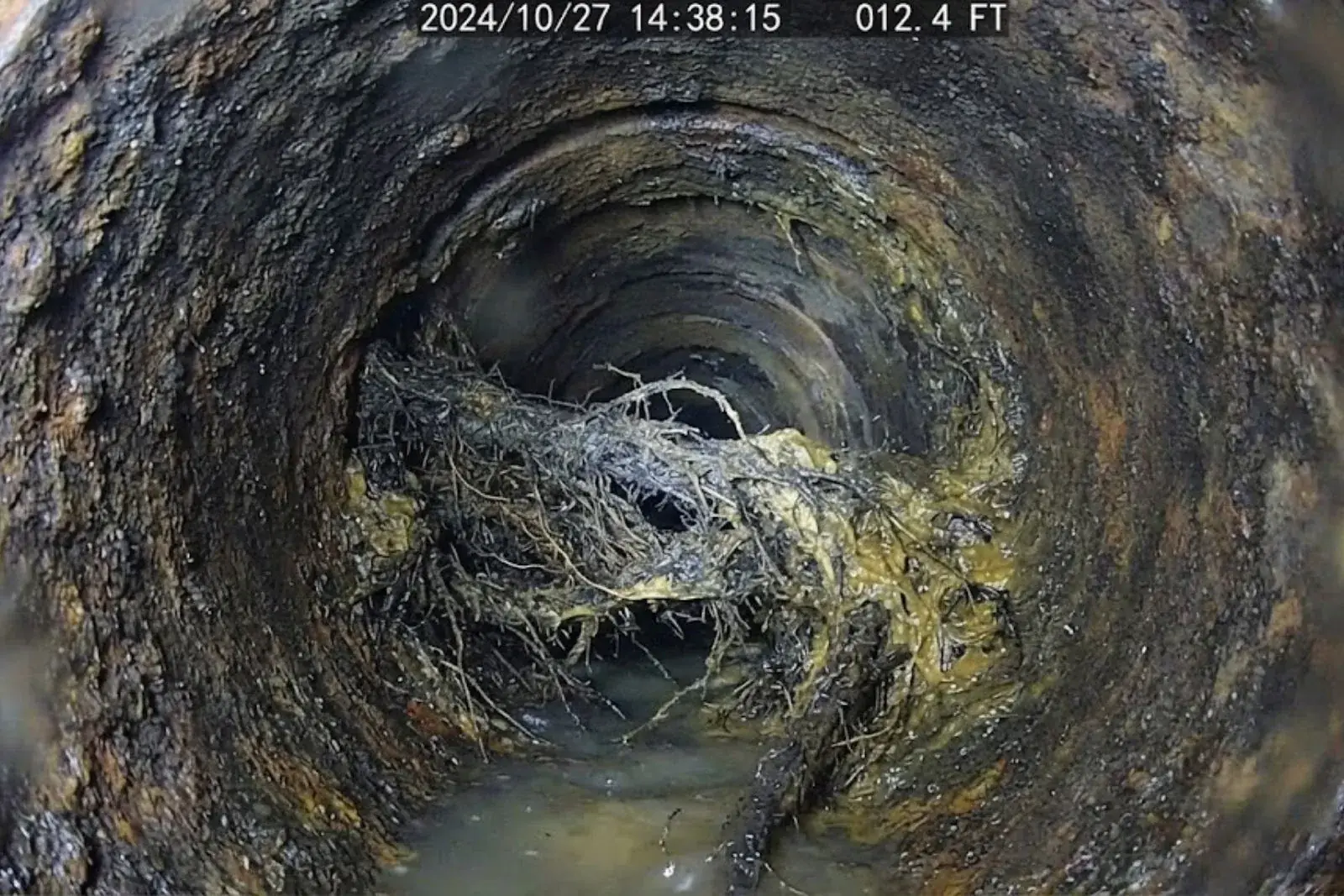
A sewer backup happens when wastewater cannot leave the house and comes up through the lowest drain instead. It is a health hazard because the water contains bacteria and should be handled with care. The first steps are to stop adding water, protect people and call a plumber.
This guide covers the immediate steps, the causes and what a plumber does to find and fix the problem. It also covers prevention, because most backups give warning signs first.
Do these first
In the first fifteen minutes
- Stop using water. Do not flush, run the dishwasher or start laundry.
- Keep children and pets out of the affected area.
- If water is near outlets, appliances or the electrical panel, do not walk through it. Turn off power at the breaker only if you can do so without entering the water.
- Wear rubber boots and gloves if you must go in.
- Call the 24/7 line and tell the dispatcher sewage is coming up.
It will not clear a main line, and it can burn the plumber or damage the pipe. It also makes the water more hazardous to handle.
Why sewers back up
| Cause | Sign |
|---|---|
| Tree roots in the lateral | Repeat slow drains, gurgling and backups in rain or irrigation season |
| Grease and wipes | Backup after heavy use, often from a bathroom or kitchen |
| Collapsed or offset pipe | Backups that return soon after cleaning |
| Bellied or sagging pipe | Standing water in the line and recurring clogs |
| Blockage in the city main | Several neighbors affected at once |
| Heavy rain or flood | Backups only after storms, often with a high water table |
A camera tells you which one it is. Our sewer camera inspection page shows what the plumber looks for, and sewer line cleaning clears roots and grease. If the pipe is broken or sagging, sewer line repair covers repair and replacement.
What a plumber does
- Find the cleanout. The plumber opens the cleanout to relieve pressure and see where the blockage sits.
- Clear the line. A cable machine or hydro jetting clears the stoppage so flow returns.
- Run a camera. A camera shows the cause, whether roots, a crack, a sag or a collapse.
- Recommend a fix. If the pipe is sound, regular cleaning may be enough. If not, the plumber discusses spot repair, lining or replacement.
- Advise on cleanup. You may need a restoration company for sewage cleanup and insurance, and the plumber can document the cause.
Who owns the line?
Responsibility for the sewer line depends on where the problem is. If it is a blockage on your side of the property line, it is yours to clear. If the city main is blocked, a call to the city is the right step, and a plumber can tell you which side the problem is on after a camera run.
Check your insurance as well. Many standard home policies exclude sewer backup unless you add a rider, so photograph the damage and call your agent after the plumber has stopped the source.
Cleanup and health
Sewage carries bacteria and viruses, so treat every surface it touched as contaminated. Porous materials such as carpet, drywall and insulation that stayed wet usually have to be removed, while hard surfaces can be cleaned and disinfected. A restoration company handles that, and your insurer may need photos and a plumber's note on the cause.
Do not use a household vacuum on sewage, and do not run fans in a way that blows contaminated air through the rest of the house. Open windows if you can do so safely, and wash hands and clothing after any contact.
Questions to ask after the line is clear
- What caused the backup, and has the cause been fixed?
- Is the pipe damaged, and if so, what are the repair options?
- Should the line be cleaned again on a schedule?
- Would a backwater valve help in this house?
- What should I tell my insurance agent?
Documenting for insurance
Take photos and video of the damage before anything is moved, and keep a list of affected items. Keep the plumber's invoice and any notes on the cause, because the insurer will ask for them. Do not throw away damaged items until the adjuster has seen them or approved it.
Ask your agent whether your policy covers sewer or drain backup, and what the limit is. Many homeowners find out only after a loss that the coverage was never added.
Local notes for Shakopee homes
Shakopee Public Utilities states that the homeowner is responsible for the water service pipe from the house to the connection at the main. For the sewer lateral, ask the City of Shakopee where private responsibility ends, because it varies by city.
Shakopee lies in the lower Minnesota River Valley, and the 2024 river flooding put the crest at Savage among the top five on record according to local news coverage. High groundwater and flooding make sewer backups more likely in low basements.
Roots find joints in older clay and cast iron laterals wherever trees grow near the line. If your house is older, a camera check is a sensible step after a first backup.
Source type: Shakopee Public Utilities residential water page and local news coverage of the 2024 Minnesota River flood
Prevent the next one
- Keep grease, wipes and paper towels out of drains.
- Have a camera look at the line if it backs up once.
- Clear roots before they build, on a schedule if they keep returning.
- Consider a backwater valve, which a plumber can discuss.
- Keep the cleanout accessible and know where it is.
We serve Savage and Chaska, both on the river, and the same 24/7 line covers every town on our list.
Backwater valves and sewer repairs fall under the Uniform Plumbing Code (UPC) as adopted in Minnesota Rules chapter 4714.
Questions we hear
It can be. The water contains bacteria, so avoid contact, keep children and pets away and use protective gear.
Often not unless you added a rider. Check your policy and photograph the damage before cleanup.
Yes. Roots enter through joints and grow into the line, and they come back unless the pipe is repaired.
The city, if the blockage is in the main. A camera run shows which side of the connection the problem is on.
It can stop sewage from flowing back into the house during a surcharge, and a plumber can tell you if it fits your setup.
Not sure which answer fits your situation? Call the 24/7 line and describe what you see.