
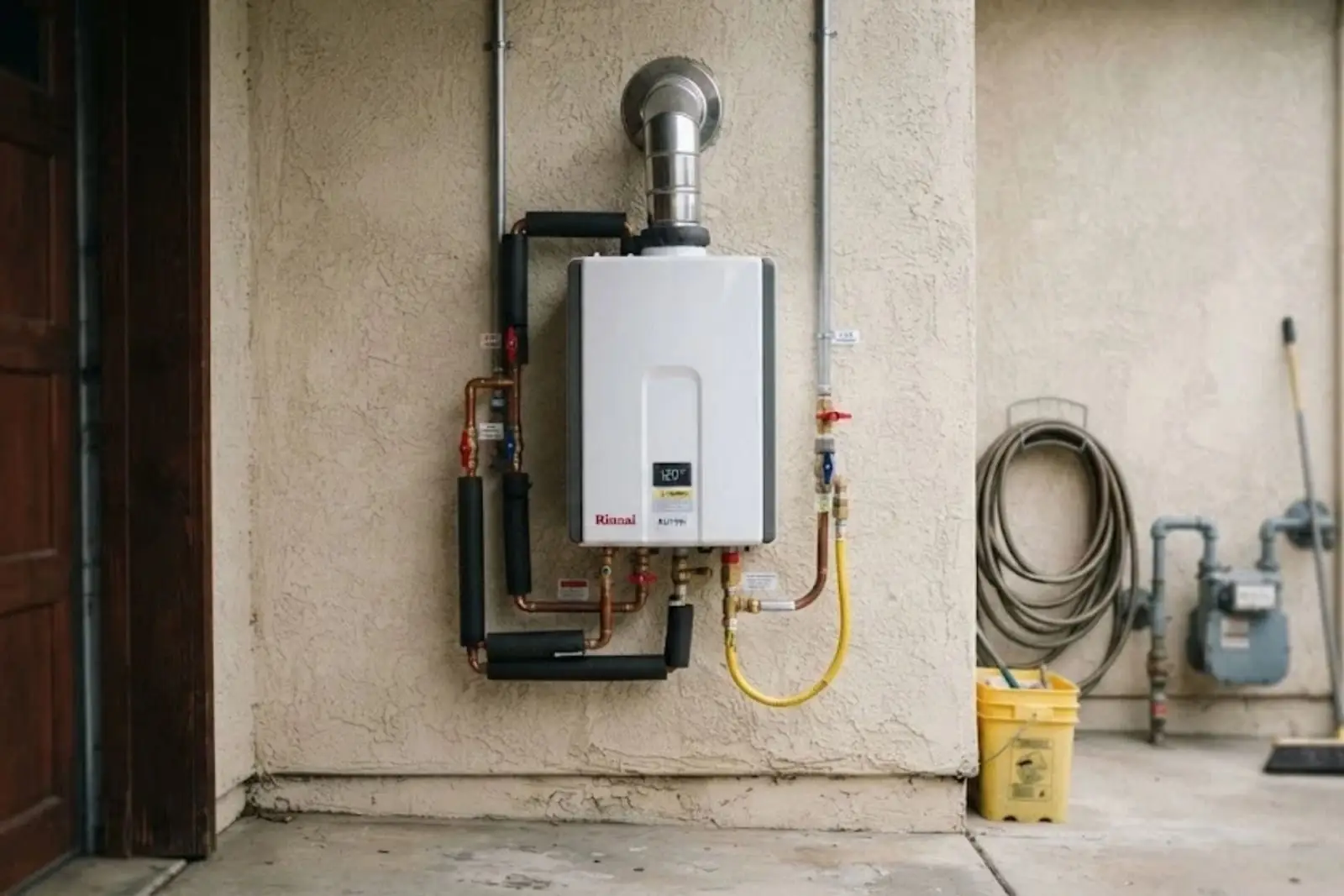
A tankless water heater in Shakopee costs more than a same-capacity tank, and the gap comes from the install more than from the unit. Prices vary by model, fuel, venting and the condition of your existing lines, so any number in a blog post is a guess. What we can do is show which parts of the job move the price, so you can read a quote with confidence.
Ask for a written scope that names the unit, gas line work, venting, water treatment and what is included. Two quotes that look far apart often cover different jobs.
The cost drivers, in order of impact
| Driver | Why it changes the price |
|---|---|
| Unit size and brand | Higher flow rates and condensing models cost more up front and save fuel over time |
| Gas line capacity | Many tankless units pull far more gas than a tank, so a small gas line may need to be upsized |
| Venting | Condensing units use plastic vent pipe, and non-condensing ones need stainless, which changes materials and labor |
| Location | Moving from the old tank spot to a garage or exterior wall adds pipe runs and wall penetrations |
| Water treatment | A scale filter or softener helps protect the heat exchanger in hard water |
| Condensate drain | Condensing models need a drain path for the acidic condensate, and some need a neutralizer |
| Electrical | Tankless units need an outlet for the controls and fan, and some need a new circuit |
Gas line sizing is the item that surprises people most. A tank heater may sip a modest amount of gas, while a tankless can demand several times that for short bursts. If the meter, regulator or piping cannot supply it, the plumber has to upgrade part of the system, and that is real labor and material.
Hard water raises the cost of owning one
Shakopee Public Utilities lists the city water at 21 grains per gallon, which it calls very hard. Scale forms on a tankless heat exchanger the way it does in a tank, but a tankless has narrow passages and less room before flow drops. Most manufacturers call for periodic descaling, and some warranties expect it.
That makes water treatment part of the budget conversation. A softener or scale prevention filter, plus a plan for an annual flush, protects the unit. See our water softener page for how to size one.
Tank or tankless: what actually changes
- A tankless has no standby tank to keep hot, which cuts fuel use when nobody is drawing water.
- It delivers hot water continuously, as long as the flow rate stays within its rating.
- It takes less floor space and can be wall mounted.
- It needs more gas, more careful venting and more maintenance in hard water.
- A tank is simpler and cheaper to replace in the same spot with the same connections.
Neither choice is wrong. A household with one bathroom and a small family may be happy with a good tank, while a house with several bathrooms and a soaking tub may value endless hot water. Our tankless water heater page covers sizing and flow rates in more detail.
Ask each contractor to list gas work, vent type, condensate handling, water treatment, permit handling and disposal of the old tank. A low quote that leaves those items out is not low once they are added.
Long-term costs to weigh
The purchase price is only one part of what a heater costs over its life. Fuel use, maintenance and the time between replacements matter as much. A tankless unit saves standby losses but needs descaling in hard water, and a tank costs less to replace but loses heat through its walls all day.
Ask each contractor for the manufacturer's stated service life and maintenance schedule, and compare those against your own plans for the house. If you expect to move in a few years, the calculation changes.
Also ask about rebates from your gas utility or the manufacturer. Programs change, so confirm the current terms with the source before you count on one.
Local notes for Shakopee buyers
Shakopee Public Utilities states on its residential page that city water is 21 grains per gallon and very hard. That affects tankless maintenance, so confirm what the manufacturer expects for descaling and whether your warranty requires it.
The City of Shakopee building inspections page lists a Plumbing Permit and an ePortal. A gas or vent change is more involved than a tank swap, so ask the city and your installer what is required before work starts.
Utility gas capacity depends on your meter and regulator, so ask the gas utility whether your service can supply a tankless unit before you commit.
Source type: Shakopee Public Utilities residential water page and City of Shakopee building inspections page
Questions to ask before you sign
A short list for any contractor
- Is the gas line sized for this unit, and who verifies it?
- What vent material and route will you use, and does it need a wall penetration?
- How will you handle condensate and descaling in our hard water?
- Who pulls the permit and schedules inspection if one is needed?
- What does the warranty require from us each year?
If you live in a neighboring town, the same questions apply. Chaska water is harder still, at 26 grains per the city, so Chaska homeowners should weigh scale protection even more heavily, while Eden Prairie softens its water to about 5 grains and Eden Prairie homes see less scale.
Gas sizing and venting for tankless units fall under the Uniform Plumbing Code (UPC) as adopted in Minnesota Rules chapter 4714 and the maker's instructions.
Questions we hear
It can be, if you plan for scale. Budget for water treatment and an annual flush, and check what the manufacturer requires to keep the warranty.
Maybe not. Many tankless units need a larger gas supply than a tank, so have a plumber size the line before you buy.
They do not run out in the way a tank does, but they can fall short if you ask for more flow than the unit is rated for at your incoming water temperature.
Often yes, but venting and gas piping may need to change. A walk-through of the basement answers this quickly.
Yes. At 21 grains, a model with accessible service ports for descaling, plus a softener or scale filter, makes sense.
Not sure which answer fits your situation? Call the 24/7 line and describe what you see.