
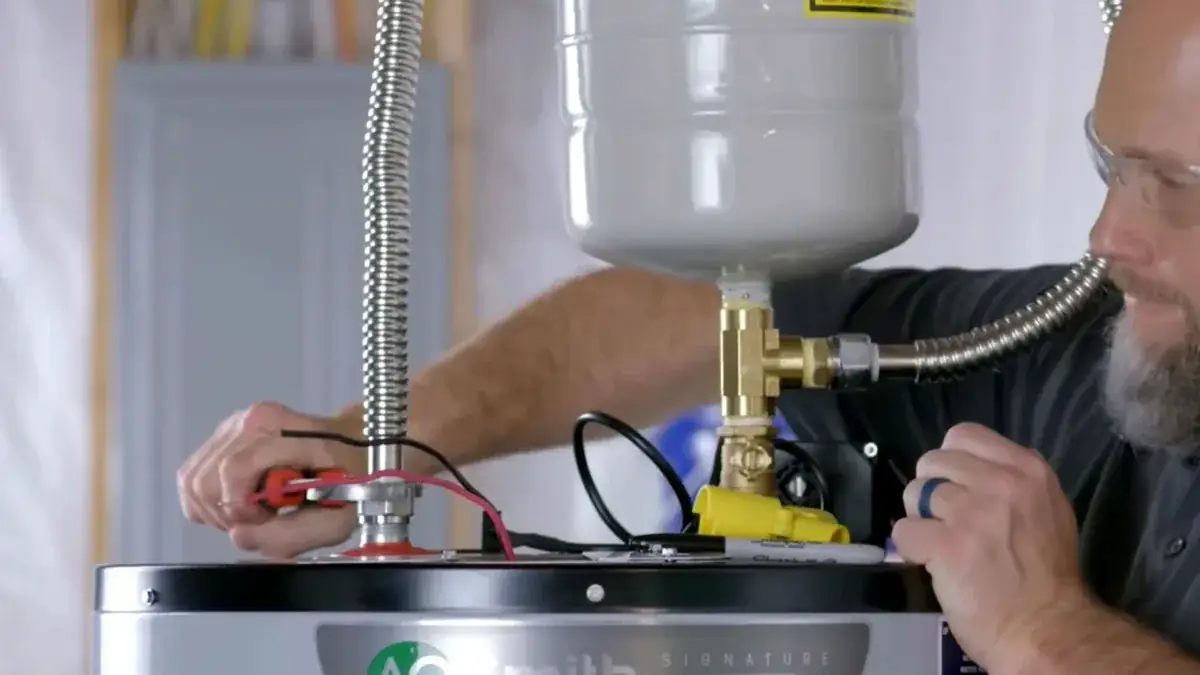
Most straight tank-for-tank swaps in a Shakopee basement take a few hours from shutoff to hot water. That is the short answer, and it holds when the new heater is the same fuel and a similar size as the old one and the connections are in good shape. Anything that changes the job, such as a new fuel type, a vent change or corroded fittings, adds time.
This guide walks through the steps of a normal swap, the things that turn a half day into a full day, and what you can do beforehand. If your tank is leaking right now, skip ahead to the checklist and then call the 24/7 line.
What happens during a normal swap
- Shut off and drain. The plumber closes the cold supply, shuts the gas valve or the breaker, and drains the old tank to a floor drain or through a hose outside.
- Disconnect. Water lines, the gas line or electrical connection, the vent and the relief valve discharge pipe all come off the old unit.
- Set the new tank. The new heater goes on the same footprint, usually with a new pan under it and straps or a stand if the setup needs one.
- Reconnect and fill. Supply lines, a new relief valve and discharge pipe, the gas or electric connection and the vent go back on. The tank fills with a hot tap open so air can escape.
- Light, test and check. The burner lights or the elements power up, the plumber checks for gas leaks and water leaks, tests venting and sets the temperature.
Heating a full tank takes longer than the install itself. A 40 gallon tank can take an hour or more to come up to temperature, so plan on warm water coming back the same day but not the same minute the plumber leaves.
What makes the job take longer
| Situation | Effect on the job |
|---|---|
| Same fuel, same size, good connections | The shortest version, usually a few hours |
| Corroded unions, old shutoff valves or galvanized nipples | Extra time to cut out and replace parts so the new tank does not leak |
| Changing from a standard vent to power vent | Extra time for new vent run, electrical outlet and condensate handling |
| Moving the heater to a new spot | A longer job with new supply, drain and venting work |
| Converting to tankless | A larger job, covered on the tankless water heater page |
| Permit or inspection needed | Scheduling time outside the visit itself |
Old shutoff valves cause more delay than any other single thing. A gate valve that has not been turned in twenty years often will not close or will not hold, and the plumber then has to shut water off at the main before starting. Replacing the shutoff during the swap costs little and saves the next person a headache.
What to do before the plumber arrives
Prep list for the basement
- Clear a path from the stairs to the heater, about three feet wide.
- Move storage boxes and paint cans away from the tank and the vent.
- Know where your main water shutoff is and that it turns freely.
- If the old tank is leaking, shut the cold supply at the tank and turn the gas or breaker off.
- Plan to be without hot water for several hours, and keep pets away from the work area.
If the tank has already failed and water is on the floor, treat it as an emergency. Our water heater replacement page covers emergency replacement, and water heater installation covers planned swaps and new locations.
Why Shakopee water matters for a new tank
Shakopee Public Utilities lists the city water at 21 grains per gallon and classes it as very hard. Hard water drops minerals out as it heats, and that scale settles at the bottom of a tank and coats the elements in an electric unit. A new heater in Shakopee benefits from a yearly flush from the first year, which keeps sediment from building up.
Local notes for Shakopee installs
Shakopee Public Utilities states on its residential page that city water is 21 grains per gallon, which it describes as very hard. That is a figure from the utility itself, so you do not need to test your tap to know the general level, though a home softener will change what reaches the heater.
The City of Shakopee building inspections page lists a Plumbing Permit and an online ePortal for applications. It does not spell out which jobs need one, so ask your installer who pulls the permit and whether your swap needs it.
Homeowners in Shakopee are responsible for the pipe from the house out to the connection at the main, and the utility bills for water used including water lost through leaks.
Source type: Shakopee Public Utilities residential water page and City of Shakopee building inspections page
Choosing a time that works
A planned swap is easiest on a weekday morning, which leaves the afternoon for the tank to heat and for any follow-up. If your heater is old and you are not sure how much longer it will last, replace it in a planned visit rather than waiting for a leak. A basement full of water takes longer to deal with than the install ever would.
Neighbors in Prior Lake and Savage follow the same pattern. The swap time is similar, but local water hardness differs, so ask your plumber about flush frequency for your supply.
The relief valve and its discharge pipe are a code item under the Uniform Plumbing Code (UPC) as adopted in Minnesota Rules chapter 4714, so check them at the end of the job.
Questions we hear
Usually yes. The tank needs time to heat after it fills, so plan on warm water returning later in the day, not the minute the plumber leaves.
An adult should be home to give access and sign off. The plumber will walk you through the new tank before leaving.
Ask your plumber when you book. Most haul the old unit away as part of the job, but confirm so you are not left with a leaking tank in the basement.
The city building inspections page lists a Plumbing Permit but does not say which jobs need one. Ask the city or your installer before the work starts.
Check that the relief valve has a discharge pipe, the shutoff turns freely, there are no drips at the fittings, and the vent is secured. A plumber should walk you through each point.
Not sure which answer fits your situation? Call the 24/7 line and describe what you see.